DOT vs ECE vs Snell: motorcycle helmet certifications explained
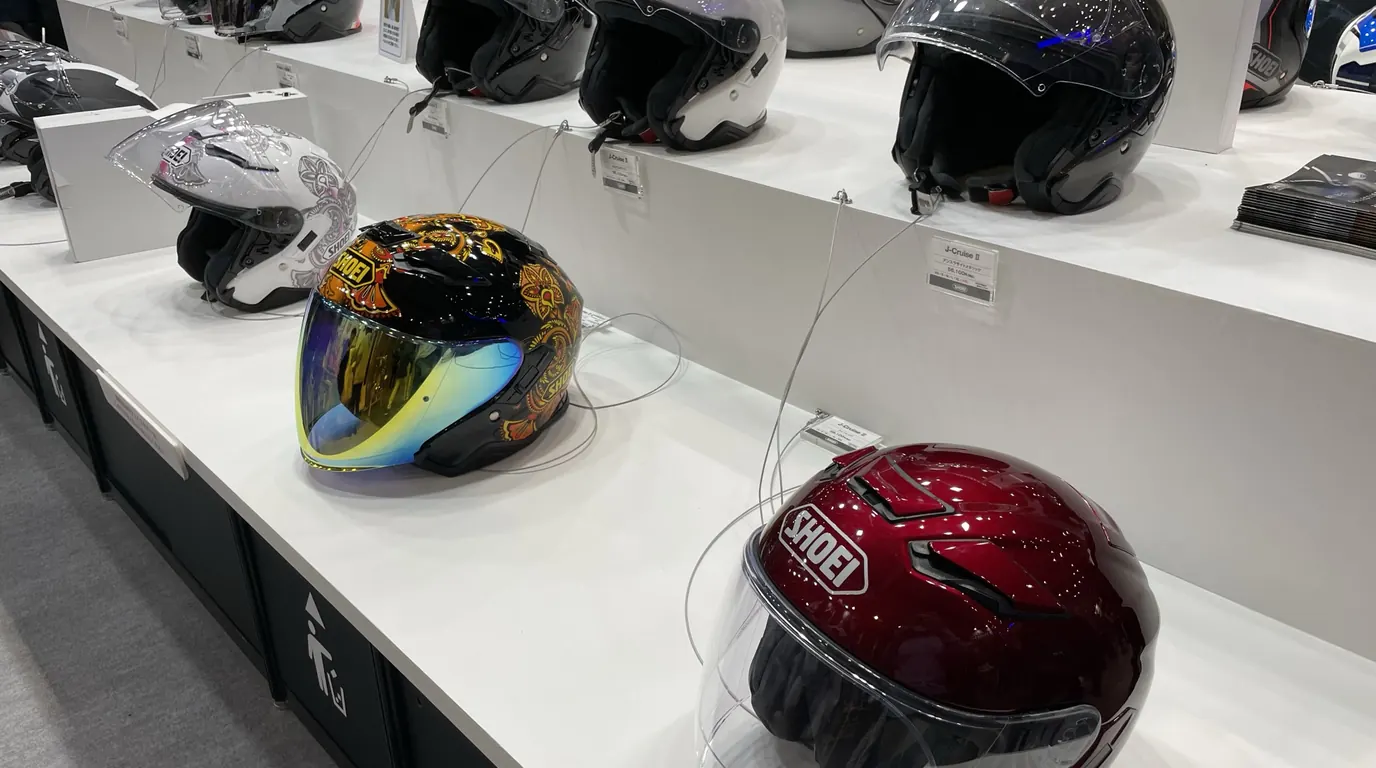
You’re at the store, or in front of a screen, and two helmets look almost identical. One costs $150 and the other $600. Both say “certified” somewhere, but one has a patch with the letters DOT, another an “E” inside a circle and a third a label with the word Snell. Which one protects better? Which one is legal where you ride? And why does your buddy swear that what matters is the model and not the acronym?
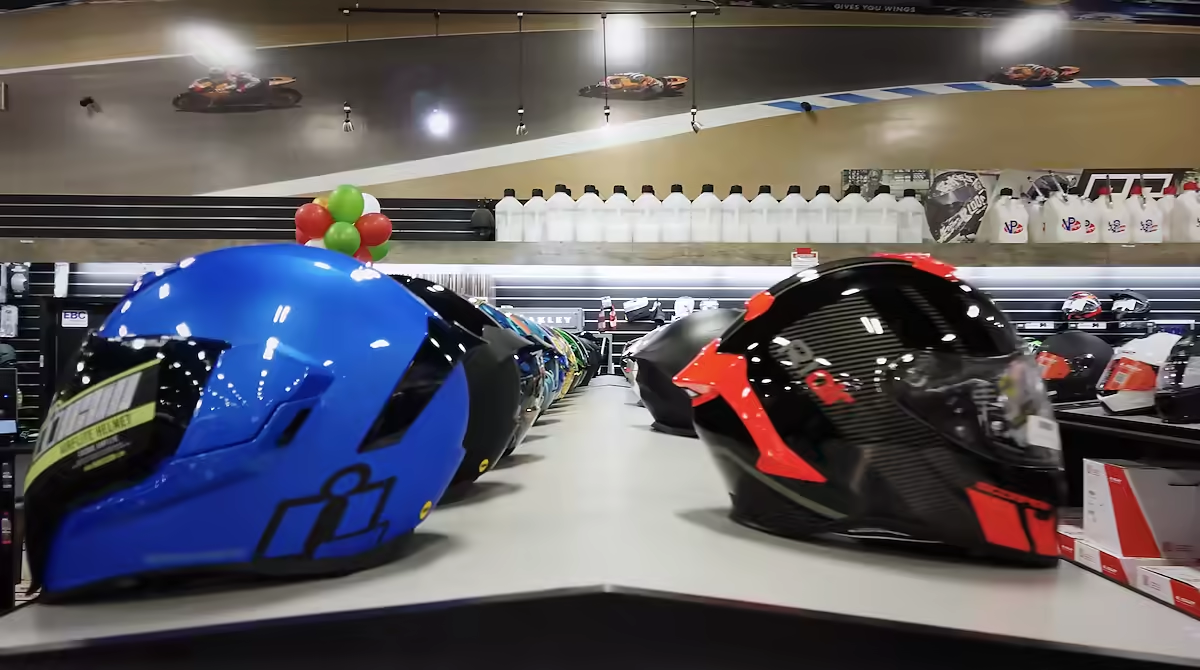
Each seal measures different things and is granted by a different party; none of them replaces a helmet that fits you well. Here we break down each acronym and how to choose.
The short version: DOT is mandatory in the U.S. and relies on manufacturer self-certification · ECE 22.06 is the latest European standard and includes a rotational impact test · Snell is voluntary and tougher on some points; the current one in 2026 is M2025 · FIM is for racing, not the street · In Mexico, NOM-206-SCFI/SSA2-2018 applies · Replace your helmet after any impact and, as a general rule, after five years of normal use.
What the standards measure
A helmet absorbs energy with a layer of foam that crushes in a controlled way, spreads the blow with its rigid shell and stays in place thanks to the strap. The standards check exactly that: how much energy reaches the head, whether the strap holds, whether something sharp gets through the shell and how much vision you keep. The newest ones add oblique impacts, which make the head rotate.
DOT FMVSS 218: the legal standard in the U.S.
The federal standard is called Federal Motor Vehicle Safety Standard No. 218, and it’s administered by NHTSA, the government’s road safety agency. It’s the standard federal law requires of motorcycle helmets sold in the U.S.
Heads up: NHTSA doesn’t approve helmets before they go on sale. The system runs on self-certification: the manufacturer declares that its product meets the standard and puts on the label that says so. Afterward, NHTSA’s compliance office puts helmets from the market through testing. With reputable brands it works; with shady sellers, that’s where fake labels come from.
What changed with the 2011 rule
NHTSA published a final rule on May 13, 2011 that overhauled labeling, with an effective date of May 13, 2013. You’ll see sources that say 2011 and others that say 2013: one is the publication date and the other the effective date. According to the rule in the Federal Register, the outside label must include the words “DOT,” “FMVSS No. 218” and “CERTIFIED,” plus the manufacturer’s name or brand and the model designation.
That label goes on the outside, on the back of the shell and centered, with the centerline of the DOT symbol between 1 and 3 inches (2.5 and 7.6 cm) from the bottom edge. The size goes on a separate label, the inside one, and must be given as a numerical measurement, not as “M” or “L.” The goal was to make it harder for novelty helmets to slap on a “DOT” with nothing behind it: according to NHTSA, those helmets fail nearly every performance requirement.
ECE 22.06: the European standard with a rotational test
UN Regulation No. 22 (UNECE R22) is the helmet approval standard in Europe and in dozens of countries that adopt UN regulations. Unlike the U.S. system, here the model goes through testing and approval before it’s sold, with production checks afterward. If you want to read the text, GlobalAutoRegs collects the versions and amendments of R22.
The 06 series came into force on January 3, 2021. Compared with 22.05, which was tested mostly with linear impacts, 22.06 added:
- Oblique (rotational) impact. An angled blow that measures the rotational acceleration that reaches the head. It’s the biggest change.
- More points and speeds. Points picked at random from a list also get hit, so the manufacturer can’t reinforce only the test zones, and there are lower and higher speeds than before.
- Visors. For the first time their resistance to penetration is tested, and light transmission limits are set for photochromic and liquid-crystal visors.
- Accessories. Official accessories, such as sun visors or mounts, are fitted during the tests.
When did 22.05 helmets stop being sold?
It depends on the country. The text of the 06 series set a timeline counted from its entry into force: after 18 months (July 2022), new approvals that didn’t meet 06 were no longer granted; after 30 months (July 2023), signatory countries had to prohibit putting approval marks from the previous series on new helmets, and after 36 months (January 2024) each signatory country may prohibit the sale of helmets that don’t meet 06. But “may” isn’t “must”: according to retailers in the business, some countries let 22.05 stock sell out, and those helmets are still legal for people who already own them.
Snell: the voluntary certification
The Snell Memorial Foundation is a private foundation that certifies helmets on its own. Its certification is voluntary: the manufacturer decides whether to submit the model.
As of October 2026, the current motorcycle standard is M2025, in two versions: M2025D, meant for helmets that also meet DOT, and M2025R, for those that also meet ECE 22.06. The main change from M2020 is an oblique impact test to measure rotational forces. According to a Snell circular, it took effect in August 2024. The official list of M2025R helmets (checked October 22, 2026) has few models, so it’s normal to still see plenty with M2020.
Tougher doesn’t mean better for you: fit and design matter as much as the acronym.
FIM: the racing standard
The FIM, motorcycling’s international federation, doesn’t regulate what you can wear on the street. Its homologation program, known as FRHPhe, applies to riders who race in FIM championships.
- FRHPhe-01: the first approved helmet came out in June 2019 for MotoGP, and in January 2020 it was extended to the rest of the circuit disciplines. It evaluated linear impacts at low, medium and high speed, oblique impacts and penetration.
- FRHPhe-02: launched in November 2022. It adds the off-road disciplines (motocross, enduro, speedway and cross-country) and new tests: oblique and hemispherical anvils for rotational forces, a test for quick removal of the cheek pads (so paramedics can take the helmet off) and a skull fracture criterion. The FIM presents it as tougher than ECE 22.06, Snell M2020 and JIS T8133.
The FIM strongly recommended it starting in 2025 and made it mandatory in its world championships starting in 2026; according to the specialized press that reported the announcement, FRHPhe-01 was accepted in road racing until December 2025. If you don’t race, you don’t need this seal.
How helmets are tested
In essence, the helmet is mounted on a test headform and dropped onto an anvil at a set speed, and sensors measure how much acceleration reaches the head. If it goes over the limit, it fails. Other tests pull on the strap and measure the field of view.
No standard tests every possible impact; they test enough to weed out bad designs. That’s why it pays to get a helmet with several certifications at once.
Comparison table
| Standard | Who requires or offers it | Who tests | Rotational | Used for |
|---|---|---|---|---|
| DOT FMVSS 218 | Federal law in the U.S. | The manufacturer self-certifies; NHTSA checks afterward | No | Street in the U.S. |
| ECE 22.06 | UN approval | Testing and approval before sale | Yes | Street in Europe and other countries |
| Snell M2025 (D and R) | Voluntary | Snell | Yes | Street and track |
| FIM FRHPhe-02 | FIM championships | Labs in the FIM program | Yes | Racing |
| NOM-206-SCFI/SSA2-2018 | Official standard in Mexico | Certification bodies (see below) | No | Street in Mexico |
Mexico: NOM-206-SCFI/SSA2-2018
In Mexico, the standard for motorcycle helmets is NOM-206-SCFI/SSA2-2018. It covers safety specifications, test methods, commercial information and labeling, for helmets made in the country as well as imported ones. Its text refers to the methods of DOT FMVSS 218 or, alternatively, those of UN Regulation 22 for the impact absorption, rigidity and retention system tests.
On labeling, the standard requires the helmet to show the size, the party responsible for the product, the country of origin, the month and year of manufacture and the warning to replace it after a hard impact, all in Spanish.
There’s a touchy issue here: the standard has transitional provisions that accepted certificates issued in the country of origin as long as there were no accredited bodies in Mexico, and several organizations, such as ITDP, have pointed out that this made it easier to sell helmets with dubious certifications and have proposed revising it. We couldn’t confirm whether a new version exists as of October 2026, so before you buy or try to comply with a local regulation, check the Diario Oficial de la Federación, Mexico’s official gazette, and the rules in your state or city. If you ride in both countries, you’re better off with a helmet that has DOT and ECE 22.06 at the same time. More on what changes when you cross the border in our guide to motorcycle regulations.
How to spot a “novelty” helmet or a fake DOT label
Novelty helmets are the tiny, lightweight ones sold as a fashion accessory. They can carry a DOT sticker without having passed a single test. Check this:
- The right label. It must say DOT, FMVSS No. 218 and CERTIFIED, with the manufacturer’s name and the model. A sticker that says only “DOT” is a bad sign.
- Thickness and weight. If inside you only see thin, soft padding instead of a thick layer of foam, or if the helmet weighs next to nothing, be suspicious. It’s a clue, not proof.
- The strap. It should have solid rivets and a sturdy fastener, not a plastic buckle.
- The inside label. Brand, model, size and date of manufacture. If anything is missing, ask.
- Price and seller. A “certified” helmet for $25 on a platform with no warranty is suspicious. Buy from authorized dealers or straight from the manufacturer.
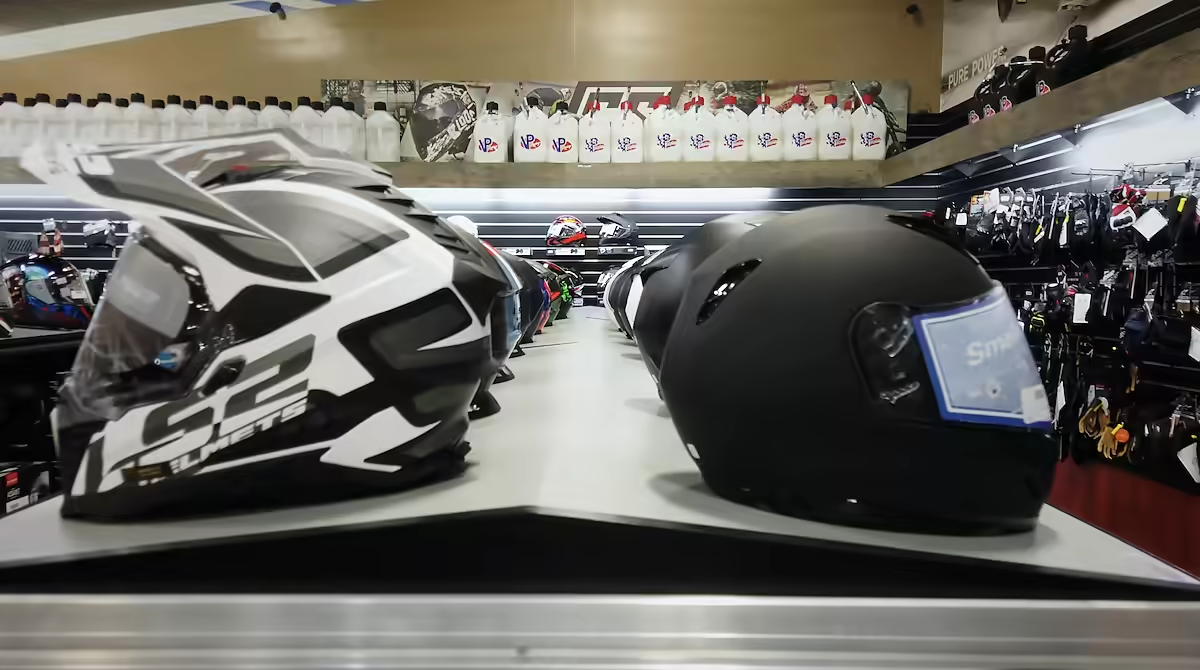
U.S. states where every rider must wear a helmet
According to the IIHS, the Insurance Institute for Highway Safety, 17 states and the District of Columbia have universal helmet laws, meaning they require every rider to wear one. Most of the other states require it only for certain riders, usually minors or new riders, and three states (Illinois, Iowa and New Hampshire) have no helmet requirement. The IIHS also reports that studies find helmets reduce the risk of death by 37% to 42%, and that riders without helmets are three times as likely to suffer traumatic brain injuries.
Counts vary by source and laws change: confirm with the IIHS and your state’s DMV. If you’re just starting out, go over Getting started to put together a full set of gear. Even if your state doesn’t make you, always ride with a helmet.
How to choose and fit your helmet
For me, the best helmets are the ones that fully cover your head and face. I don’t feel safe in ¾ helmets that only protect your face with a shield; that’s why I chose to buy a full-face and a modular. Fit varies from model to model, but as a general rule there shouldn’t be pressure points anywhere on your head, and the helmet shouldn’t be loose either: it has to fit snugly, to the point where your head can’t move inside it. Here’s how.
For the highway, a full-face offers the best face and chin coverage; a modular is comfortable if you stop often, and an open-face leaves your face exposed.
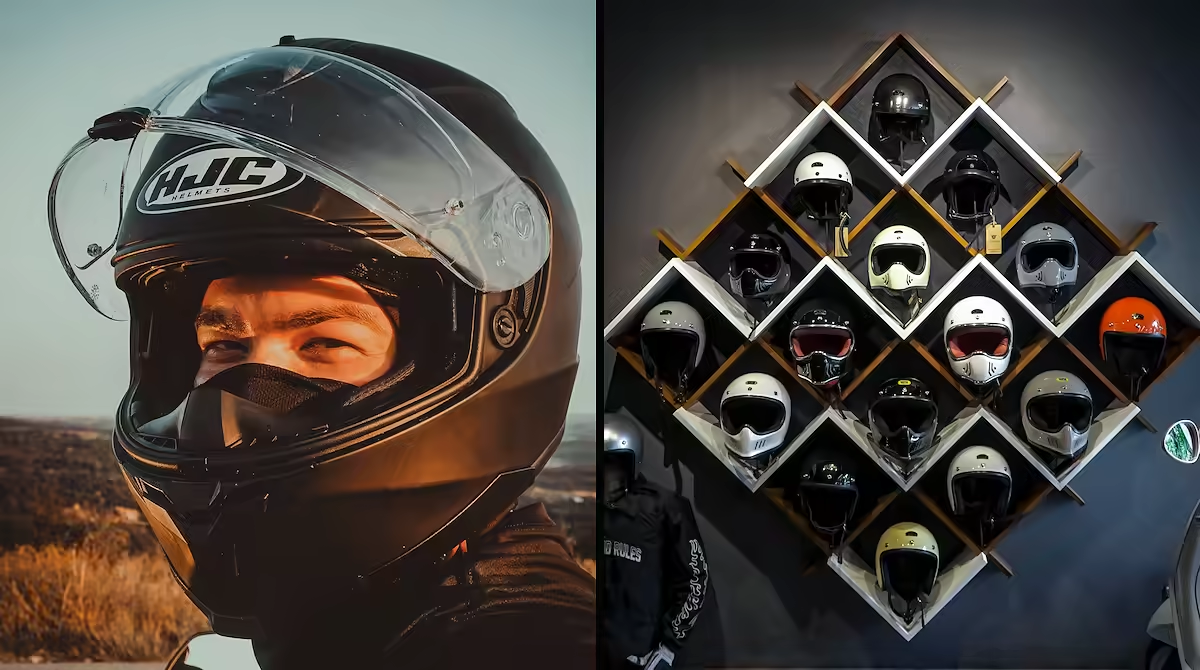
Fit: what actually matters
The helmet should be snug, with no painful pressure points. Test it like this:
- Measure the circumference of your head with a tape, above your eyebrows and ears. Compare it with the brand’s size chart.

- Put it on and buckle it. With the strap fastened, try to move the helmet from side to side: the skin on your forehead should move with it.
- Your cheeks should feel a little squeezed; a new helmet feels tight because the foam gives with use.
- Try to roll it forward by grabbing it from the back: it shouldn’t slide down over your eyes.
- Keep it on for 10 or 15 minutes. If there’s already a sore spot, on the highway it’ll be unbearable.
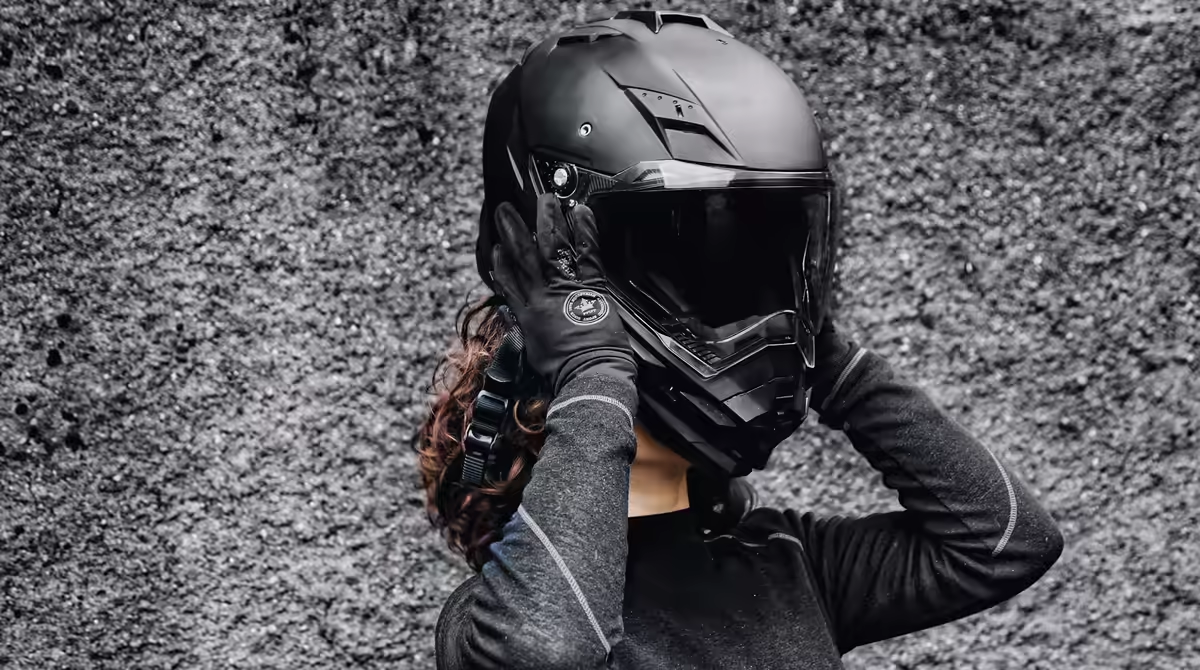
If you wear glasses, try them with the helmet on. Every brand has its own internal shape, and how well it matches your head matters more than any seal.
When to replace it
There are two clear rules. The first: after an impact, replace it. Snell puts it this way in its FAQ: if the helmet was involved in an impact while it was being worn, replace it, because not even a good helmet protects adequately the second time. The foam gets compressed and there may be damage you can’t see with the naked eye. If you’re unsure after a simple drop, check with the manufacturer.
The second: with the passage of time. Snell recommends replacing it after five years of normal use, or sooner if the manufacturer says so. It makes clear that this is a prudent guideline, not an automatic expiration date: an unused, properly stored helmet doesn’t suddenly expire. The wear comes from putting it on and taking it off, which breaks down the padding and the foam and can leave it loose.
Frequently asked questions
Which is better, DOT or ECE 22.06?
There’s no absolute winner. ECE 22.06 includes rotational tests and approval before sale; DOT is the legal requirement in the U.S. and gets checked afterward. Ideally, get a helmet with both.
Can I wear an ECE helmet without DOT in the U.S.?
Under federal law, a street helmet must meet FMVSS 218. A helmet with only ECE may not satisfy your state’s rules or the letter of the law. Check with your state’s DMV.
Does a Snell helmet replace DOT?
No. M2025D helmets also meet DOT, and M2025R helmets also meet ECE 22.06. Snell comes on top of the mandatory certification.
Is a more expensive helmet safer?
Not necessarily. Price usually reflects weight, materials, ventilation, noise and comfort. A certified helmet that fits you well protects better than an expensive one that’s loose on you.
Is a secondhand helmet OK?
We don’t recommend it: you don’t know whether it took a hit or how it was stored.
One helmet, one decision
The acronym on the label is a starting point, not the finish line. Look for a helmet that meets the standard where you ride, ideally adds ECE 22.06 or Snell, fits like a glove and gets replaced when it’s time. Compared with what it protects, it’s one of the cheapest things you’ll ever buy as a rider.
Photos
Cover: Ohgud.kibn7ewyu2, via Wikimedia Commons · CC BY-SA 4.0 · cropped.
Photo 1: the author’s personal archive.
Photo 2: Matheus Triaquim, via Pexels · Pexels License.
Photo 3: the author’s personal archive.
Photo 4: left, takenby missu; right, Labskiii, via Pexels · Pexels License.
Photo 5: brongkie brongkie, via Pexels · Pexels License.
Photo 6: Andrea Aliverti, via Pexels · Pexels License.
