Getting started on a motorcycle: the complete guide to starting out safe
You’ve had it in your head for months. Your neighbor’s used bike that you can have “for a good price,” or the new one you saw in the showroom window that followed you all the way home. You open a search engine, type “how to learn to ride a motorcycle,” and get a thousand videos of people pulling wheelies. Not one of them tells you where to actually start.
This guide is the order that’s missing. It won’t talk you out of riding, and it won’t pretend riding is as safe as sitting on the couch. What it does is put your first steps in the sequence that cuts the most risk: understand the numbers, take a course, buy full gear, check the bike every time you ride, and put your first 500 miles in with your head on straight.
The short version: Per mile, the risk is much higher than in a car, but your own choices can bring it down a lot · Course first, bike second · Helmet, jacket, gloves, pants and boots on every ride · T-CLOCS check before you start the engine · Your first 500 miles are for practice, not performance
The mindset and the real risk
Let’s start with the uncomfortable part. The U.S. National Highway Traffic Safety Administration (NHTSA) publishes a motorcycle fact sheet every year. In the most recent one, with 2024 data, the motorcyclist fatality rate was 28.00 per 100 million vehicle miles traveled, compared with 1.05 for passenger car occupants. NHTSA sums it up this way: nearly 27 times higher. The same report counts 6,228 motorcyclists killed in traffic crashes in the U.S. in 2024.
Two things to keep in mind when you read that number. First, it’s a rate per mile traveled: motorcycles get used less than cars, so the number is calculated this way to keep the comparison fair. Second, it’s an average of every rider out there, with and without a helmet, with and without training, sober and not. You can ride well below that average, and almost everything else in this article is about how.
What you do control
You don’t control the driver who didn’t see you. You control plenty of other things: how fast you roll into an intersection, how much space you leave, whether there’s alcohol in your system, whether you’ve got a helmet and jacket on, whether your tires are in good shape, whether you’re climbing onto a machine that’s way too big for you. That list of small things is what separates a careful beginner from one who’s just running on luck.
A mindset that works from day one:
- Assume they don’t see you. Ride as if the car ahead is about to turn without signaling.
- Learn not to rush. Motorcycles reward the rider who leaves ten minutes early.
- Your pride doesn’t have brakes. If a stretch of road scares you, slow down or turn around. Nobody’s grading you.
- Zero alcohol, zero fatigue. Not even one beer “for the road.” This rule isn’t up for negotiation.
Course first, bike second
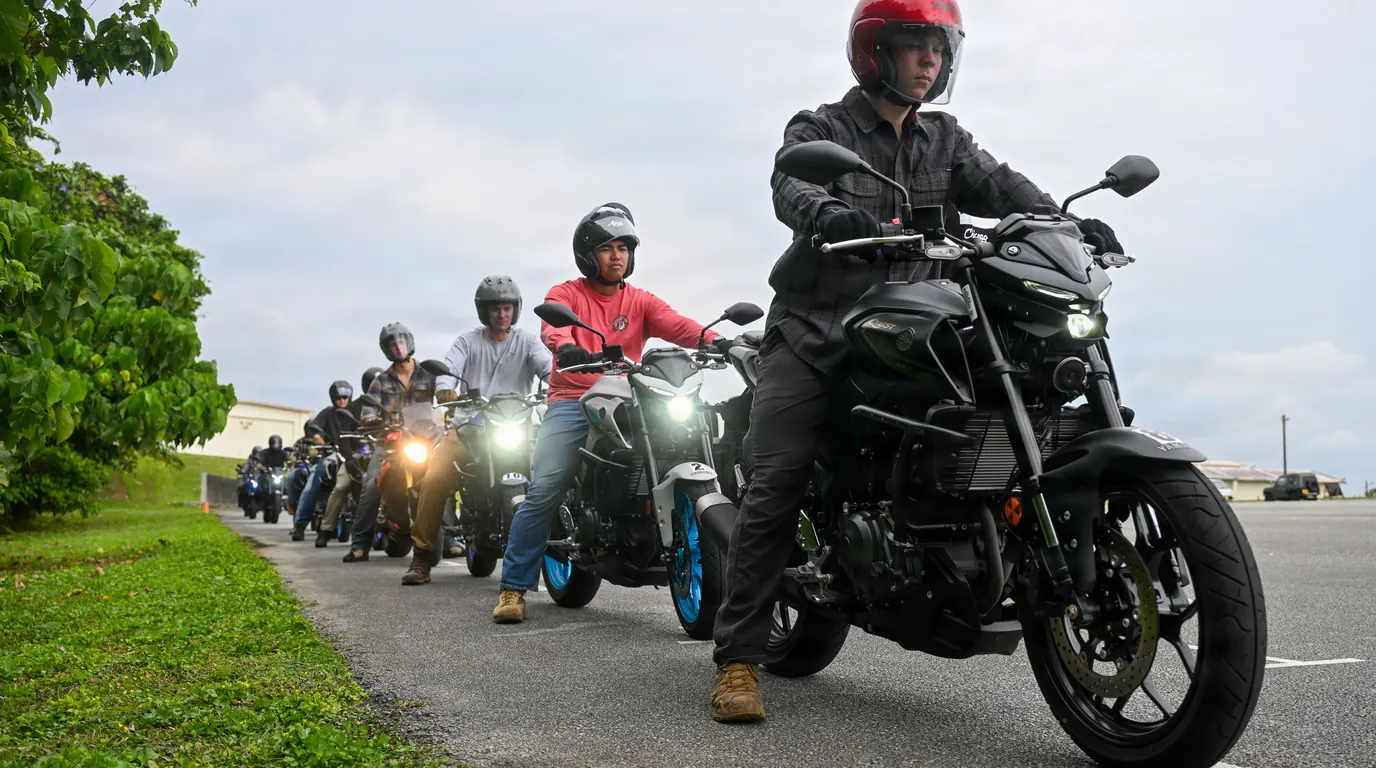
A lot of people buy the bike and then figure “I’ll learn somehow.” It’s the other way around. A beginner course teaches you clutch, brake and turning control in a closed parking lot, with instructors who’ve seen every mistake a thousand times and loaner bikes you won’t cry about dropping.
In the United States
The benchmark is the Motorcycle Safety Foundation (MSF) and its Basic RiderCourse, which runs roughly a weekend and combines classroom work (in many places with an online portion) and range practice on small bikes. Many training sites lend you the bike and sometimes the helmet; confirm when you sign up, because it varies. On top of that, in many states passing the course can replace the DMV riding test. That changes from state to state and sometimes from provider to provider, so check your DMV’s official page or your state’s motorcycle safety program before you count on the waiver. The MSF website shows you how to find a course near you.
If you’re going for your Class M license with a license from another country, our motorcycle license guide covers the process state by state and what changes in Canada, Mexico and the European Union.
In Mexico
There’s no single national standard like the MSF, but there are options. In Mexico City, the city’s transportation department (Semovi) runs Motoescuela CDMX, an introductory safe-riding workshop that takes about four hours: an online classroom portion (up to 120 minutes) and an in-person riding session. According to Eje Central’s coverage from April 2026 (in Spanish), for the riding portion you need to be of legal age and bring your own bike, a valid license and full gear, with boots, not sneakers. Requirements, locations and schedules change, so confirm them on Semovi’s official website before you go. In other states, ask the local transportation or traffic department and driving schools with certified instructors. If you can’t find anything formal nearby, a private instructor with a proven track record and a big parking lot beats teaching yourself.
My experience: one course on each side of the border
Here’s how it went for me. Before I moved to the States, I took an intro course in Mexico City with my girlfriend at the time. Two instructors showed up in the Estadio Azteca parking lot with two 150 cc Suzukis, the pizza-delivery kind. Back then the course cost 1,000 pesos for six hours of training. First they walk you through the parts of the bike and what each one does, and then little by little they hand you full control of the bike. Honestly, it was a lot of fun.
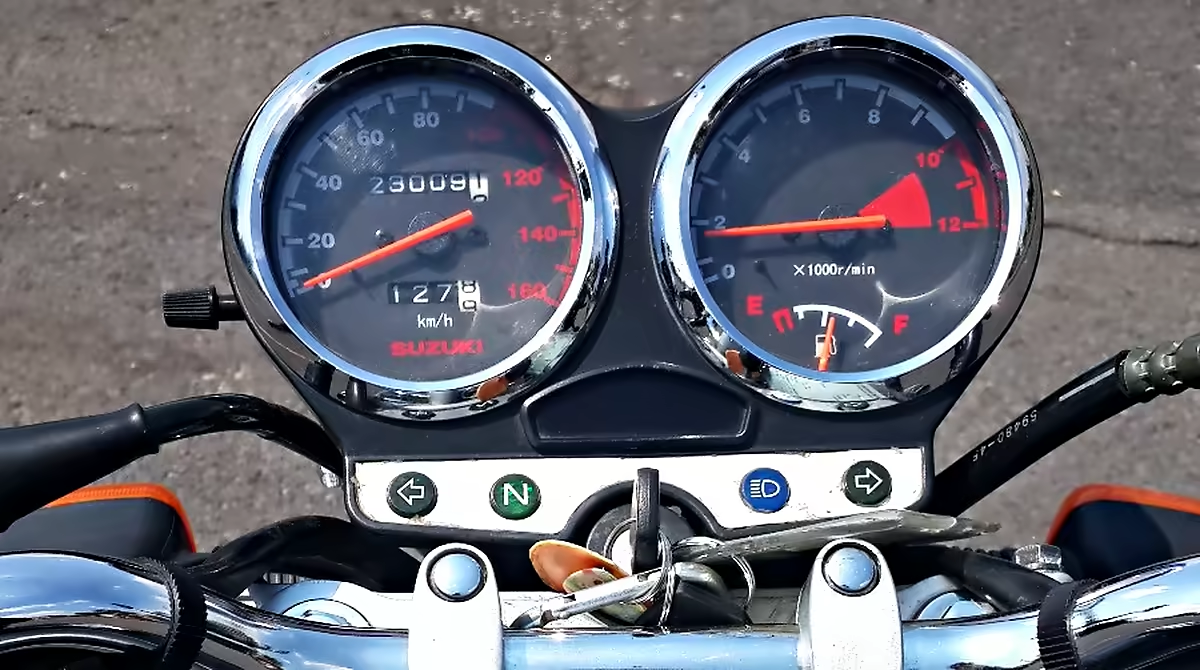
Once I was on this side of the border, I went back and forth for years about buying a motorcycle. I thought about it a lot and kept telling myself it wasn’t the right time, but the itch won, and suddenly I was signed up for the weekend MSF course (in California it’s run by the California Motorcyclist Safety Program, the CMSP). It took three days, and the first one was all classroom, online.
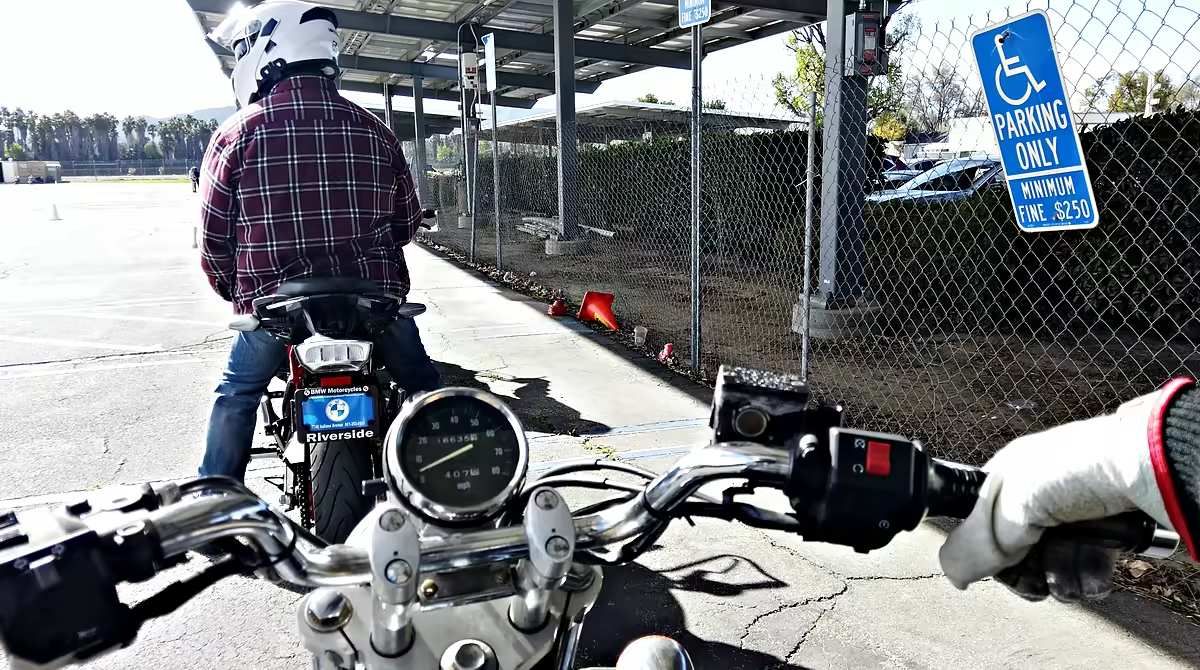
Day two started at 6 a.m. with roll call, bike assignments and loaner gear: just a helmet and gardening gloves. If you already have your own gear, you can bring it. That day, same as in the Mexico course, they teach you the parts of the bike, the basics of how it works, and your first baby steps easing off the clutch, so you get a feel for the weight of the bike.
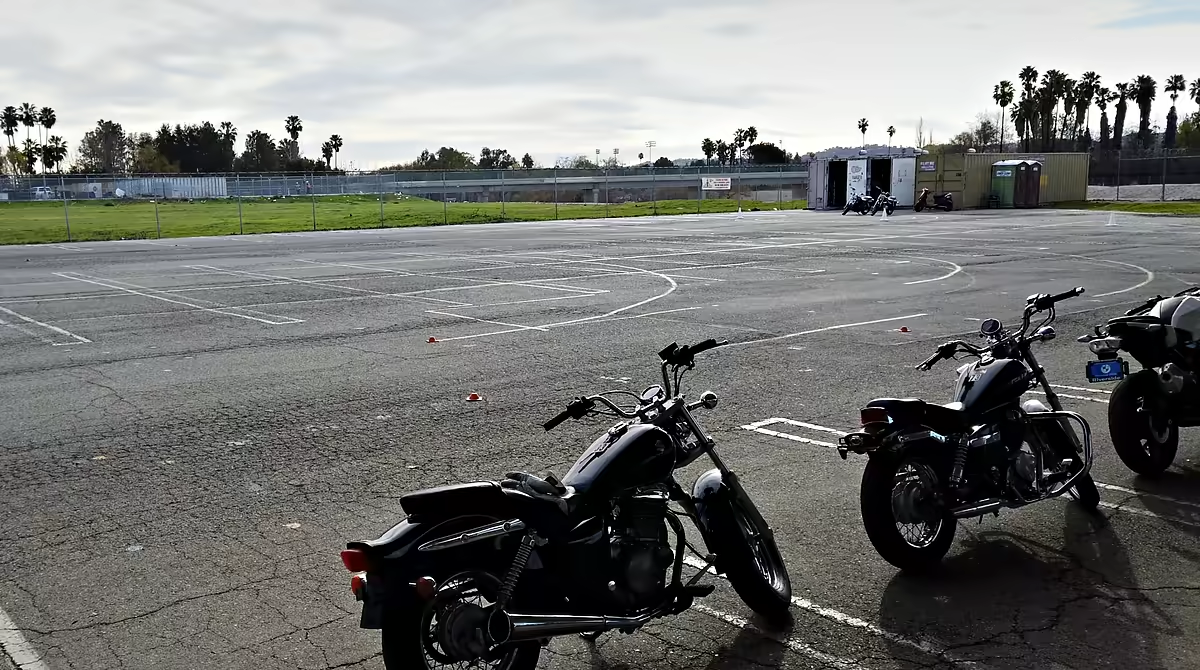
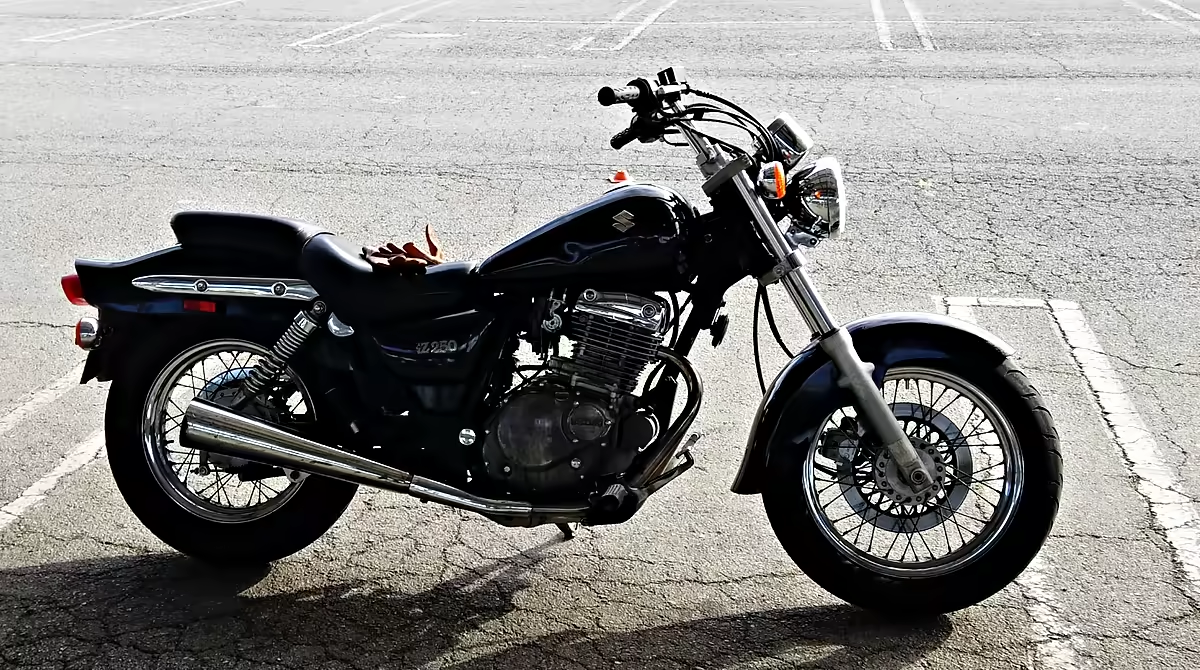
By day three the course takes more shape: the exercises get more specific, and you train emergency braking, low-speed control, swerving around hazards, traffic rules, intersections and more. At the end there’s a riding test and a written one. If you pass, they give you a yellow form (the DL 389 certificate) that, like I mentioned above, lets you skip the riding test at the DMV (Department of Motor Vehicles) when you get your M1 motorcycle license. Back then the course cost around $300; in 2026, the program’s providers in California charge $425 if you’re 21 or older and $395 if you’re 20 or younger. Check the current price before you sign up.
Rule of thumb: if the course seems expensive, compare it with the cost of a cracked helmet, a damaged bike or an emergency room visit.
Full gear: ATGATT
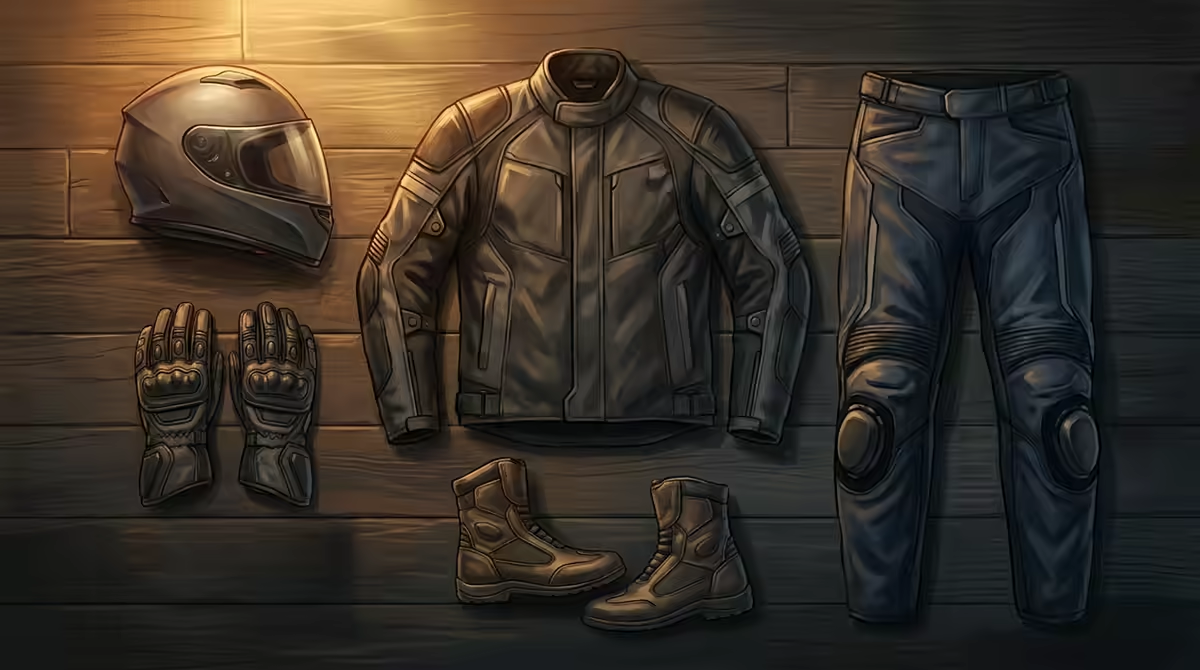
ATGATT stands for “All The Gear, All The Time.” Five pieces, every ride, even if you’re just going to the corner store. A lot of people think you don’t need anything at low speed, and that’s exactly when one careless moment costs you your skin.
The helmet: the investment that isn’t up for debate
NHTSA estimates that helmets are 37% effective at preventing deaths for motorcycle riders and 41% for passengers. That figure comes from its official methodology, published in 2005 with data from 1993 to 2002: it isn’t new, but it’s the one NHTSA still uses. Here’s the technical report. In plain terms: in a crash where a rider without a helmet would have died, the helmet prevents the death in roughly 4 out of 10 cases.
Buy a certified helmet (in the U.S., DOT at a minimum; a lot of riders also look for ECE 22.06 or Snell) that fits snug, without painful pressure points. Our guide to DOT, ECE, Snell and NOM helmet certifications explains the differences and how to spot a fake.
An honest budget
Prices vary a lot by brand, country and season. The ranges below are approximate ballpark figures for 2026 (our editorial estimate, not an official price list); check real prices before you buy.
- Certified helmet: $100 to $300. Move up a tier if you ride a lot: better ventilation, less noise, a better visor.
- Jacket with armor: $150 to $400. More if you ride in rain or cold.
- Motorcycle gloves: $40 to $120.
- Pants with armor: $100 to $300.
- Motorcycle boots: $100 to $300.
Add up the basics and you land somewhere around $500 to $1,400. That’s real money, yes. If your budget is tight, prioritize in this order: helmet, gloves, boots, jacket, pants. And remember this is on top of the bike: count your gear as part of what the bike costs, not as an extra.
Look for certified armor (CE Level 1 or 2) at the shoulders, elbows, back and knees. Regular jeans don’t count: they wear through in seconds against the pavement.
The pre-ride check: T-CLOCS
The MSF suggests a quick check of a few minutes with an easy-to-remember acronym, T-CLOCS. Each letter is one area of the bike:
- T: Tires and wheels. Cold tire pressure, wear, cuts, anything stuck in the tread.
- C: Controls. Levers, pedals, cables, a throttle that snaps back on its own.
- L: Lights and electrics. Headlight, brake light, turn signals, horn, battery.
- O: Oil and other fluids. Oil level, brake fluid, coolant, leaks.
- C: Chassis. Suspension, steering, chain or final drive, loose bolts.
- S: Stands. The kickstand goes up and down smoothly and the spring holds it.

The MSF hands out a printed checklist to Basic RiderCourse students; ask for one at your course or check your owner’s manual for the exact specs (tire pressure, oil type, chain slack). Don’t make numbers up: every model has its own.
Walk around the bike in the same order every time. The first few days it takes you five minutes; in a month, two. If something gives you doubts, you don’t ride until it’s sorted out.
Choosing your first bike
The best advice here isn’t glamorous: a bike you can put your feet down on comfortably, that’s light and that doesn’t have more power than you need. A small or mid-size engine is more forgiving and lets you focus on technique. In best motorcycles for beginners we compare options in the U.S. and Mexico.
If you’re buying used, have someone with experience look it over with you, and be wary of deals that look too good. A bike that’s been dropped before can come with bent handlebars, bent fork tubes or a fatigued frame. And if you’re tempted to buy “something big so I don’t have to upgrade later,” don’t: a bike that scares you is harder to ride and less fun.
Insurance and paperwork
The rules are different everywhere, so this is the basics to get your bearings, not legal advice.
- In the U.S., most states require minimum liability insurance to ride on the road. Those minimums tend to be low, and a serious crash can blow right past them. Ask about uninsured motorist coverage and medical payments. Get quotes from several insurers: your premium depends on your age, state, record and type of bike.
- In Mexico, whether liability insurance is required for motorcycles depends on each state, and some require it to ride on the road or to get plates. Check your state’s rules instead of assuming.
- License and registration. Without the right license (Class M in the U.S.; in Mexico, a motorcycle license) your insurer can refuse to pay after a crash. Don’t risk it.
A plan for your first 500 miles
In my case, my first 500 miles (about 800 km) were practice in parking lots, day and night, plus the occasional road with a different level of difficulty.
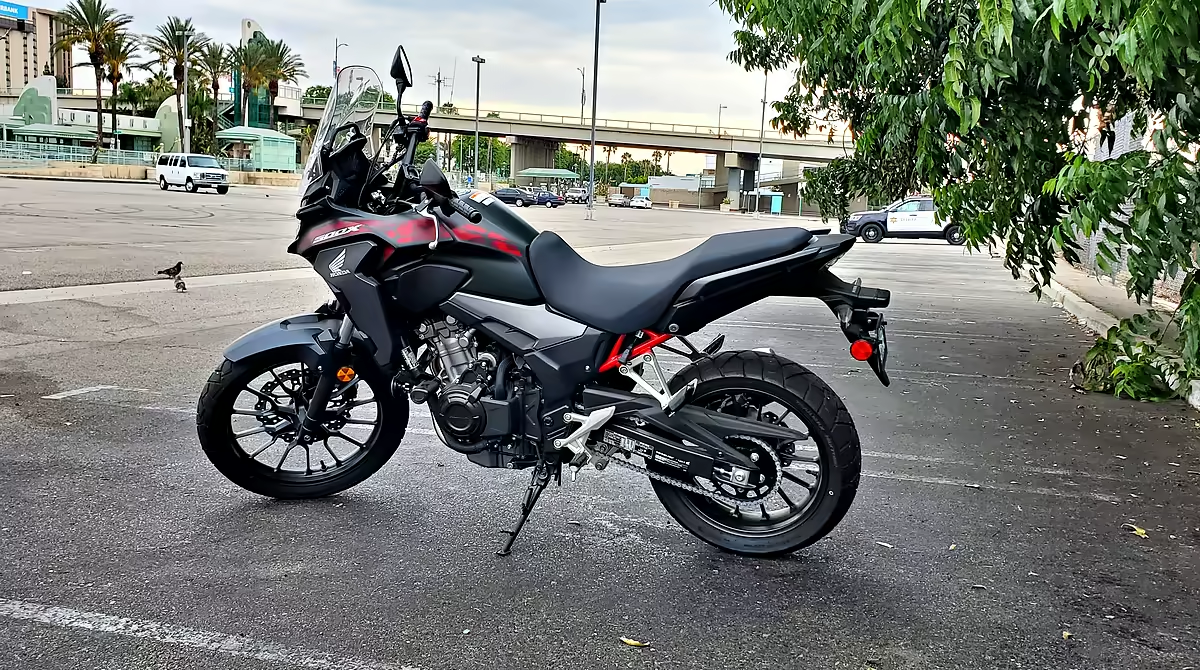
Remember that these first “rides” aren’t about going far: they’re about building habits and understanding technique. One way to split up those 500 miles, as a flexible guide and not a rule carved in stone:
- First 0 to 30 miles: an empty parking lot. Starting and stopping, tight turns, braking with both brakes, the kickstand, pushing the bike around. Repeat until it gets boring.
- 30 to 100 miles: quiet streets in your area, in daylight, with light traffic and good weather. Practice stopping smoothly at every corner and looking where you want to exit the turn.
- 100 to 250 miles: light traffic. Traffic lights, lane changes, head checks over your shoulder. Learn to position yourself in the lane so you get seen.
- 250 to 500 miles: a mix of routes. Curves, faster roads, some light rain if there’s no way around it. Still no high-speed freeway riding and no passengers.
One of those practice sessions was on a road with steep climbs and descents. That’s the moment the theory goes out the window and the mistakes show up: I grabbed the front brake mid-turn with the clutch pulled all the way in, and gravity did its job immediately. It was a reminder that the technique wasn’t locked in yet, and that I still had to learn which brake to use in each situation and the right technique at low speed. Lesson learned, friends!
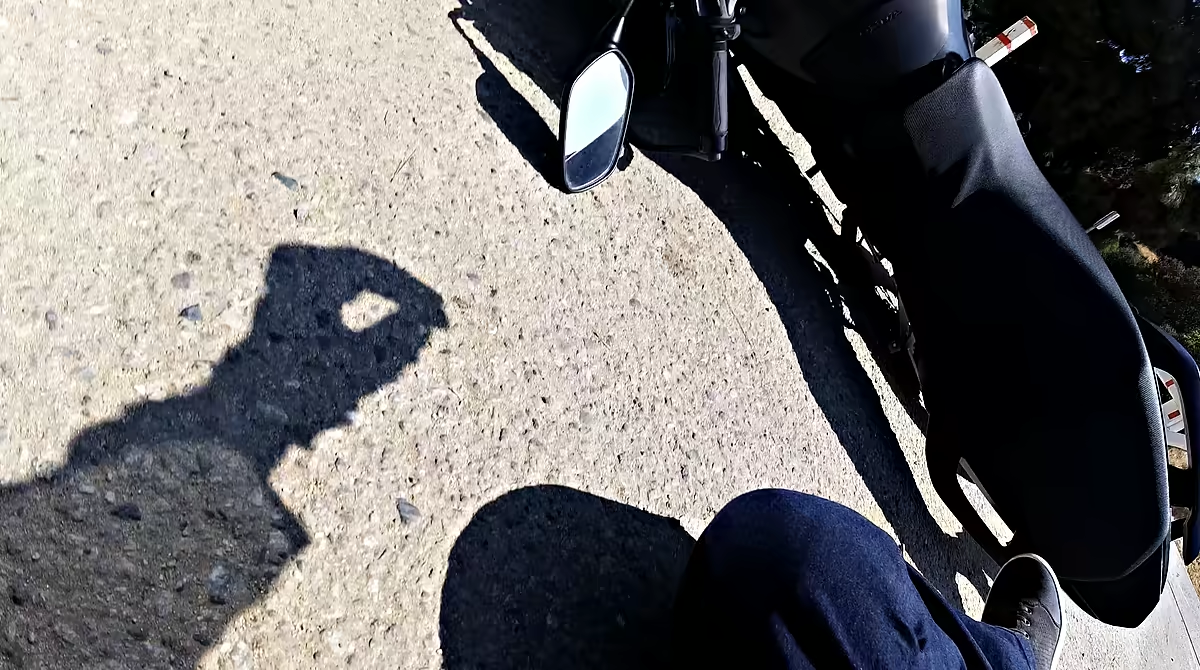
For specific drills, check out our Motorcycle confidence article, with parking-lot work, cornering and braking.
Typical rookie mistakes
- Buying too much bike. A machine with more power than you can handle turns a one-second slip into a serious problem.
- Skipping the course, or thinking an internet video is enough.
- Riding without gear “because it’s a short trip.” A patch of sand or a car turning in front of you doesn’t care whether the trip is short or long.
- Looking at the obstacle instead of the way out. The bike goes where you look; in a curve, look where you want to come out.
- Braking wrong. Only the rear, or only the front and all at once. Practice progressive braking with both in a safe place.
- Riding tired, sleepy or with alcohol in your system. No discussion.
- Getting on the freeway too soon, before you’ve put time in on streets with normal traffic.
Frequently asked questions
How much does it cost to start riding?
It depends on the bike, but basic full gear usually runs between $500 and $1,400 (an approximate 2026 figure, as explained above). Add the course, insurance, registration and a fund for maintenance. Set that money aside before you buy the bike.
Is a riding course mandatory?
It depends on where you live. In the U.S., it depends on the state: some require it at certain ages, in others it lets you skip the riding test, and in others it’s optional. Mexico doesn’t have a single national requirement either. Even if nobody makes you, take it: it’s the safety investment with the best return.
How dangerous is riding a motorcycle?
According to NHTSA, with 2024 data, the motorcyclist fatality rate per mile traveled was nearly 27 times that of passenger car occupants. That average includes high-risk behavior; with a course, full gear and staying sober, your personal risk drops significantly.
How often should I do the T-CLOCS check?
The quick version, before every ride. A more thorough inspection (fluids, bolts, tire wear) is worth doing at regular intervals according to your owner’s manual.
What comes next
Learning to ride is more like learning a language than buying a gadget: you practice a little at a time, you’re grateful when someone corrects you, and you enjoy it a lot more once the basics stop worrying you. If you take the course, wear full gear, check your bike and respect your first 500 miles, you’re already ahead of most beginners. The rest, the routes and the rides with your friends, will come on its own.
Photos
Cover: Sgt. Briana Vera, U.S. Marine Corps, via Wikimedia Commons · Public domain.
Photo 1: the author’s personal archive.
Photo 2: the author’s personal archive.
Photo 3: the author’s personal archive.
Photo 4: the author’s personal archive.
Photo 5: illustration created with artificial intelligence for Milla x Milla.
Photo 6: illustration created with artificial intelligence for Milla x Milla.
Photo 7: the author’s personal archive.
Photo 8: the author’s personal archive.
The illustrations are for reference only: they don’t depict exact models or places.
