
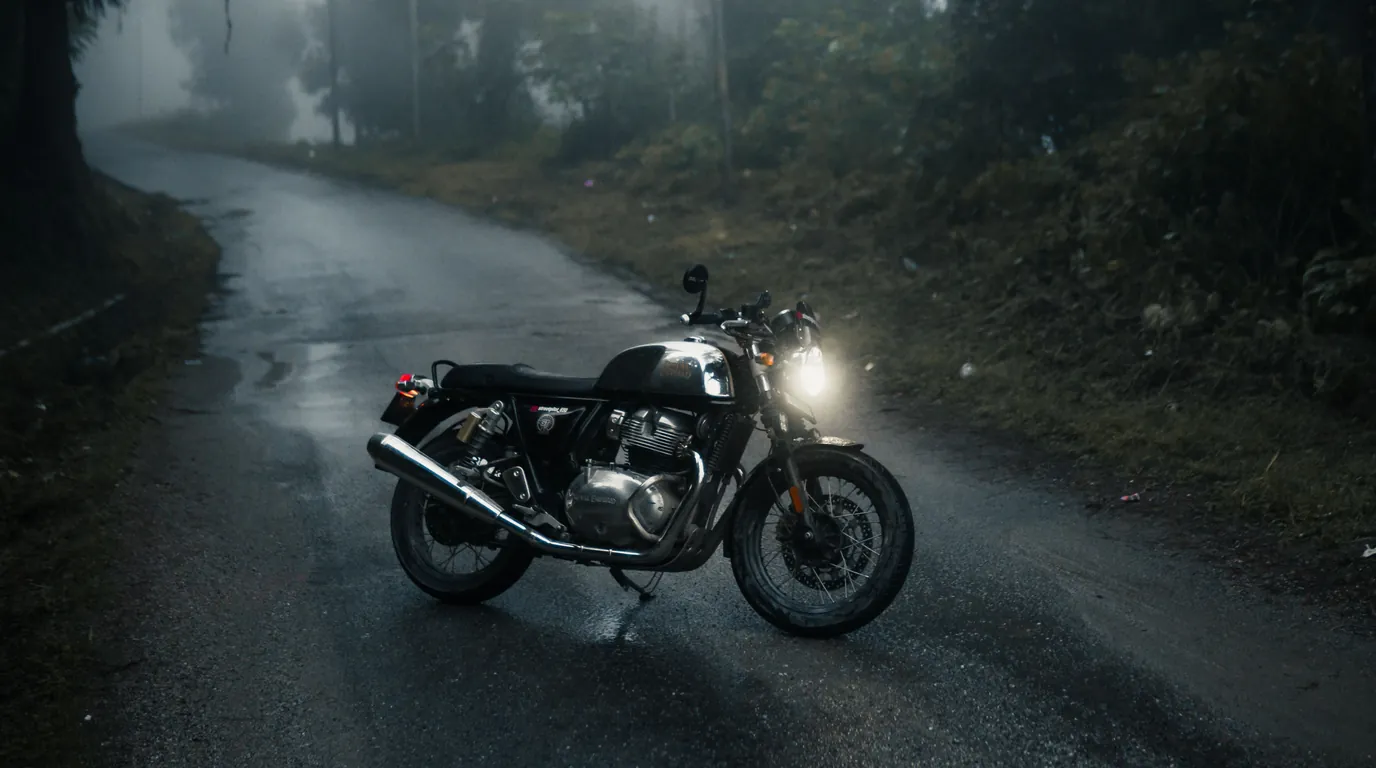
Riding a motorcycle in cold weather: the morning I learned to dress
It was 5:40 in the morning and my phone said 37°F (3°C). There I was, brave and prepared (or so I thought): my summer jacket with extra thermal layers and a hoodie underneath, my usual gloves plus a rain pair just in case, thinking spring was here and everything was fine because “it’ll warm up in a bit.” Spoiler: it did not warm up. If you’ve ever wondered what riding a motorcycle in cold weather really feels like, here’s how it went for me: stiff fingers, no feel for the shift lever under my left foot, and a lesson I will never forget.
The plan was simple: leave before sunrise to beat the morning rush of people heading to work in Los Angeles, and get a head start on a road trip.
Here’s what I got wrong, how I patched it halfway there, and the gear I ride with now when the thermometer drops: layers, hands, foggy glasses, tires and the signs that it’s time to pull over. At the end you’ll find a quick checklist and answers to the most common questions about riding a motorcycle in winter.
In short: At highway speed your skin feels far colder than the thermometer reads · Dress in three layers, and make sure none of them is cotton · Your hands, neck and eyes (especially if you wear glasses) each need their own plan · Cold tires and cold pavement grip less, so take the first miles easy · Watch for frost on bridges and shaded stretches · Stop every 40 minutes, and sooner if you can’t stop shivering or your fingers go numb
The first twenty minutes lied to me
The bike started right up on the first try, that low rumble sounding twice as loud so early in the morning. Empty streets, blinking yellow lights, the night’s dew still in the air. It felt like I was in a movie.
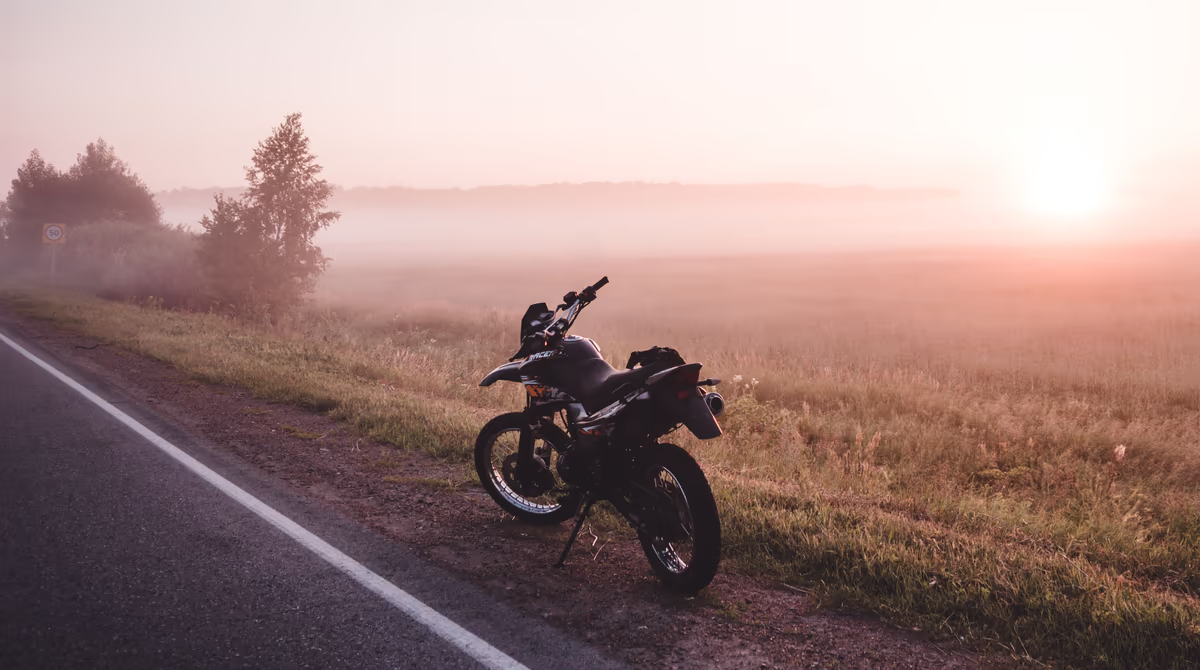
Then I hit the highway. At 60 mph (about 97 km/h) the air stopped being crisp and started cutting. It found my collar, my sleeves, the gap in my zipper. Half an hour in, my fingertips were going numb and every brake squeeze felt like a guess. That’s when it clicked: cold doesn’t just make you uncomfortable. It steals your reflexes.
Wind chill on a motorcycle: why the wind cuts so deep
What I felt has a name: wind chill. The U.S. National Weather Service (NWS) calculates it from the air temperature and the wind speed, and on a motorcycle you make your own wind. Plug the 37°F from that morning and a 60 mph wind into its formula and you get about 20°F, or roughly −6°C. My phone said 37; my skin was feeling 20.
Two things are worth keeping straight. Wind chill is about skin and bodies: according to the NWS, objects don’t cool below the actual air temperature, so the wind won’t freeze the pavement or the bike. And the NWS only calculates it at 50°F (10°C) and below, which is exactly the range where plenty of riders still head out in summer gear. Since more speed means more wind, a jacket that’s fine around town comes up short on the highway.
Layering for motorcycle riding, learned at a gas station
I pulled into a gas station halfway there, shaking. The kid behind the counter looked up and asked, “Coming from far?” I said no. He laughed.
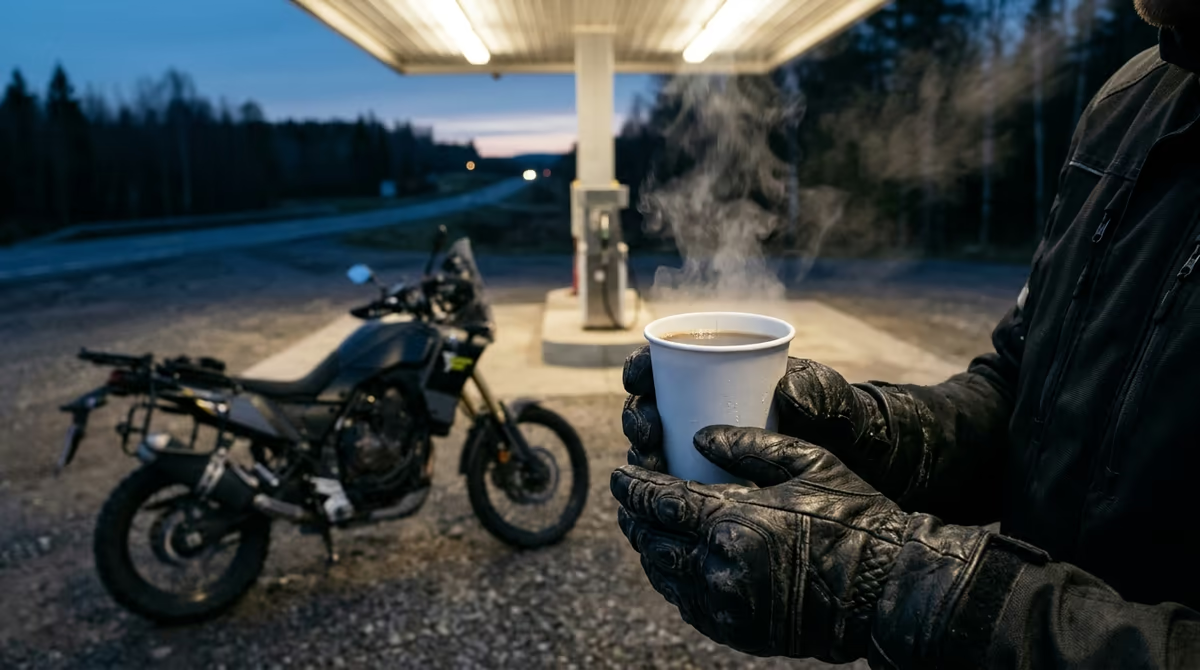
With a hot coffee thawing my hands, I took inventory. The thermal layers and the hoodie were holding some heat, but nothing I had on blocked the wind: a summer jacket is made to let air through, and mine let all of it through. I’d zipped it all the way up to my collar and the air still slipped in through the zipper and the sleeves. My usual gloves aren’t winter gloves. And my prescription glasses kept fogging up inside my helmet.
So I improvised what I could: my rain jacket went over the top as a windbreaker, and on went the rain gloves I’d packed just in case. I looked like a stuffed burrito, and it helped a little, but the cold stayed with me the rest of the way.
And watch out for cotton, the fabric most hoodies are made of: it soaks up sweat, stays wet and, once it’s wet, chills you faster. The Centers for Disease Control and Prevention (CDC) warn that hypothermia can happen even at cool temperatures, above 40°F (about 4°C), if a person becomes chilled from rain or sweat.
Riding a motorcycle in cold weather: my gear now
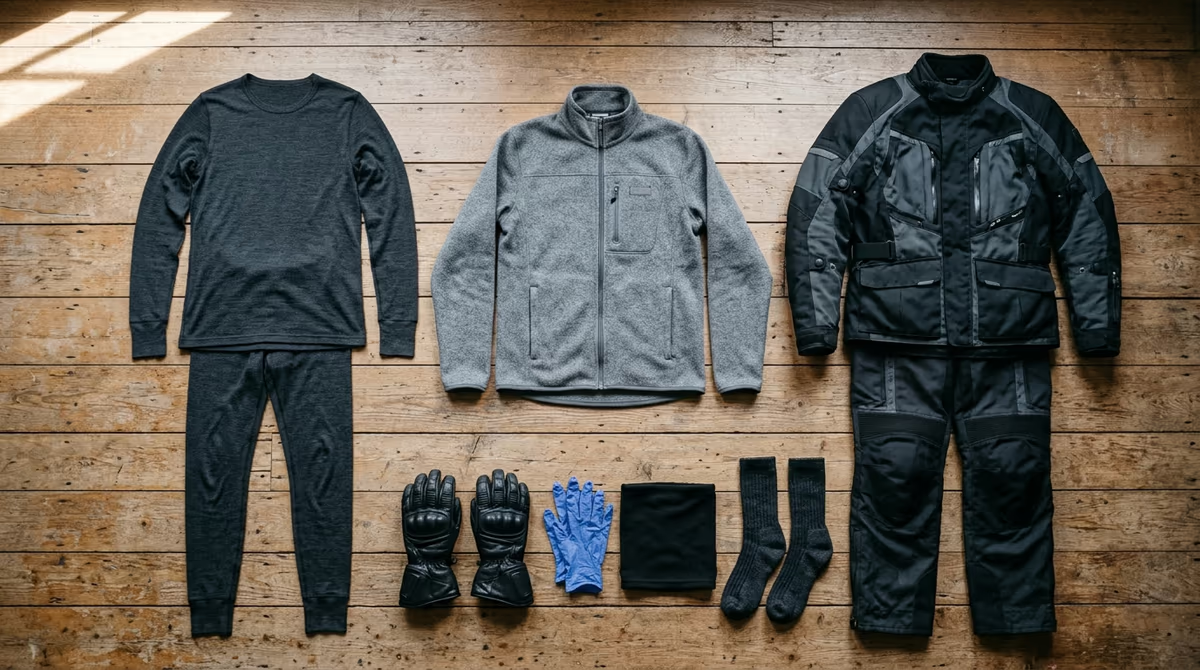
My cold weather motorcycle gear these days still comes in layers, but now I think them through: three of them, a base layer that isn’t cotton, a middle layer that holds heat, and a windproof shell on top. Wind is the real enemy, more than the number on the thermometer: that morning I had layers; what I was missing was the outer one.
Hands get extra attention. Real winter gloves, not your everyday pair, and heated grips if your bike can take them. A riding buddy swears by thin latex gloves under your regular pair, and I’m a convert. Add a neck gaiter, a way to keep your glasses and visor from fogging up (and a properly certified helmet, of course), and short stops every 40 minutes to wiggle your fingers and drink something warm.
If you read my guide on planning a solo motorcycle road trip, you know I like to prepare. The cold found the one thing I didn’t.
Cold weather motorcycle gear: three layers, no cotton
The base layer sits against your skin, and its job is to move sweat away: merino wool or a synthetic thermal fabric, long-sleeved, with bottoms to match. The middle layer holds heat: a thin fleece or a puffy vest that doesn’t bind at the shoulders or elbows. The outer layer stops the wind: your riding jacket and pants with the thermal liner in or, if they’re summer gear, a rain jacket over the top, like I did at the gas station.
Two things people forget. Your legs get cold too, especially your knees, which take the wind head-on. And every vent on your jacket gets closed before you leave: if you’re sweating in town, open the zipper a little at red lights, but close it before you get up to speed. If you’re still putting your gear together, Getting started on a motorcycle covers everything worth wearing.
Winter motorcycle gloves and heated grips
Your hands suffer first because they sit right in the wind and barely move. Real winter gloves, with a thermal liner and a windproof membrane, change the whole ride. Look for a long gauntlet and wear it over your sleeve, so air can’t sneak in at the wrist.
The latex trick works because it blocks the wind and holds in your hand’s heat. If latex gives you a reaction, nitrile does the same job. Just don’t go tight: a snug glove cuts off circulation and makes your hands colder. If your bike can take them, heated grips are one of the best winter upgrades you can make, and handlebar muffs, the covers that mount on the bars, block the wind completely.
Neck, face and feet
The neck is where most of the air gets in, and zipping your jacket all the way up isn’t enough, as I found out that morning. A fabric or fleece neck gaiter covers your throat and the back of your neck, and it tucks under the helmet with no loose ends to flap in the wind.
A full-face helmet seals out the air far better than an open one, and a good helmet starts with its certification: DOT vs ECE vs Snell explains how to read them. For your feet, wool or thermal socks that aren’t tight and boots that cover the ankle. Frozen feet also lose feel on the rear brake and the shift lever.
Heated gear: when it’s worth it
If you ride in the cold a lot, there are heated vests, jackets and gloves that plug into the bike’s battery or carry their own. They work very well, but before you plug anything in, check the manual to see how many spare watts your bike’s charging system has. Small bikes sometimes can’t run grips, a vest and gloves all at once, and what you end up with is a dead battery halfway there.
Foggy glasses under a motorcycle helmet: how to keep seeing in the cold
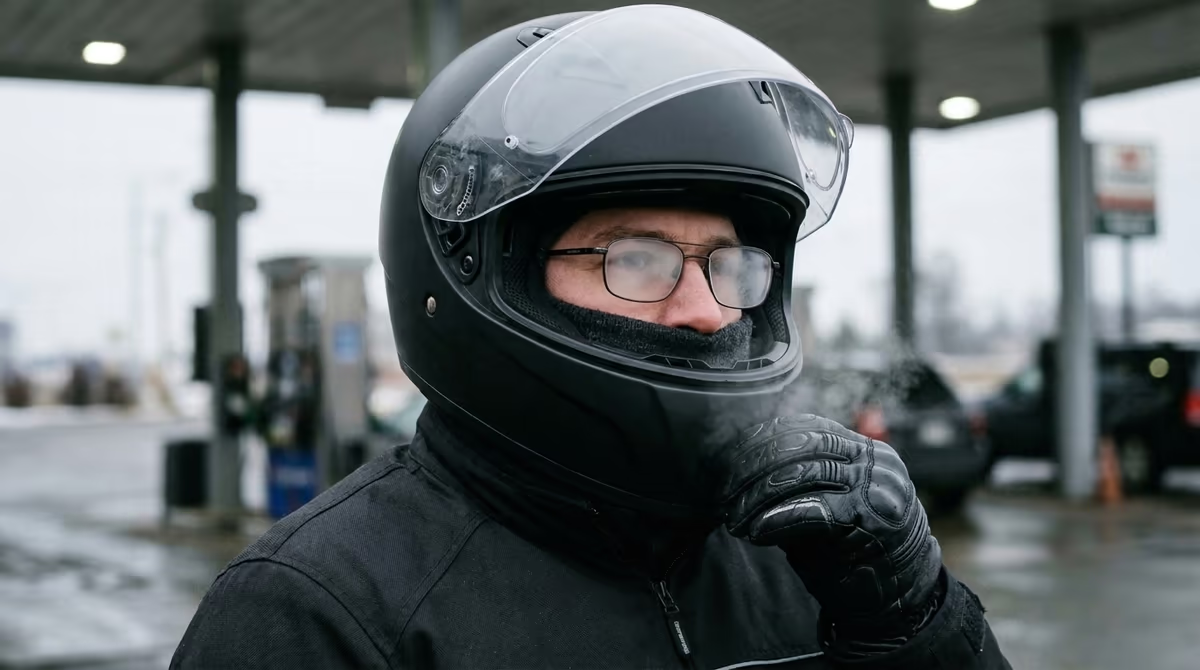
My visor never fogged up; what fogged up were my prescription glasses, inside the helmet. And if you can’t see, no technique will save you. It happens because your warm, humid breath rises and hits the cold lenses, especially when you stop and the air stops flowing. Here’s what helps with glasses, and almost all of it works for the visor too:
- Keep your breath from rising. A breath deflector, the piece under the helmet’s chin, sends the vapor down. And if you wear a neck gaiter, keep it below your nose: the air that escapes over the top goes straight to your lenses.
- Let air in. Open the helmet vents and, at stops, crack the visor open a notch; close it fully again before you pull away.
- An anti-fog made for eyeglasses, as a spray or wipes, applied before you leave. If your lenses have an anti-reflective coating, make sure the product says it’s safe for it.
- Never wipe them with your glove: you’ll scratch the lenses and wear off the coating. Keep a clean microfiber cloth in a pocket you can reach.
- If it’s your visor that fogs, the most effective fix is a Pinlock-style anti-fog insert, the second lens that mounts inside the visor. Many helmets already have the pins for it, so check whether yours does.
If they just won’t clear, pull over somewhere safe. Riding at speed with the visor open in that kind of cold makes your eyes water, and then you can’t see either.
Cold tires, cold pavement and frost
The cold doesn’t only get to you. Tires grip better when they’re warm, and on a freezing morning they take longer to warm up; cold pavement doesn’t help either. That’s why the first miles go easy: brake early, roll on the throttle smoothly and don’t lean too far in the first corners.
Tire pressure changes too. As a rule of thumb that tire makers repeat, it drops about 1 psi for every 10°F the temperature falls. Check it cold, before you leave, against the number on your bike’s label or in the manual, not the one molded into the tire, which is the maximum.
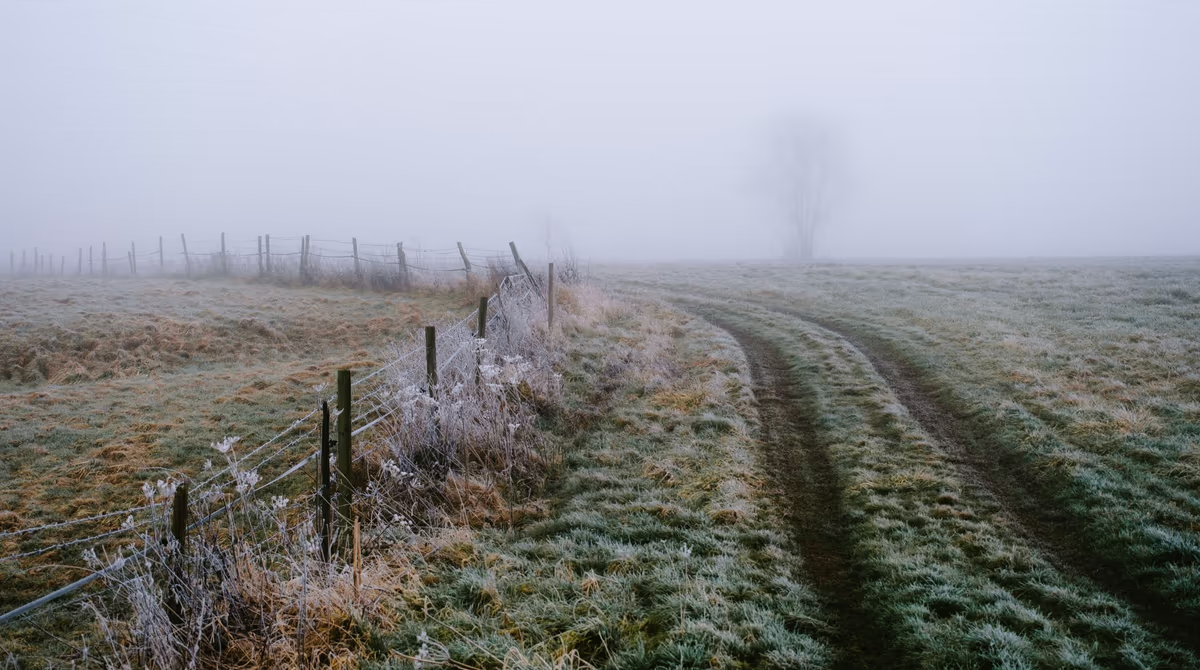
Then there’s frost. Bridges, overpasses, shaded stretches and roads near rivers or reservoirs cool off before the rest of the road, and on clear nights they can ice over even when the air reads a little above 32°F (0°C). If you see an odd shine on the pavement or white frost on the grass and fences, like in the photo, slow down before you reach that stretch.
If you end up on a slick patch anyway, keep the bike upright, don’t brake, don’t chop or snap the throttle, and let it pass. The work in Motorcycle confidence: technique and drills is exactly what keeps you from making sudden moves when the road gives no warning.
When to stop: hypothermia and frostbite
That morning I was shaking, and that was already a sign. The CDC lists these warning signs of hypothermia in adults: shivering, exhaustion or feeling very tired, confusion, fumbling hands, memory loss, slurred speech and drowsiness. On a motorcycle, fumbling hands and confusion count double, because your brakes and your decisions depend on them.
If you start shivering nonstop, if it’s hard to move your fingers or if you notice you’re thinking slowly, stop. Find somewhere warm and indoors, take off anything wet, warm the center of your body first (chest, neck and head) and drink something warm, but no alcohol, as the CDC advises. Don’t get back on until it passes. If body temperature drops below 95°F (35°C), or if someone is confused or very drowsy, get medical help right away: 911 is the emergency number in both the U.S. and Mexico.
Frostbite is the other risk, especially for fingers and toes, the nose, ears, cheeks and chin. According to the CDC, redness or pain can be the first sign; then come white or grayish-yellow skin, skin that feels unusually firm or waxy, and numbness. If you suspect it, don’t rub or massage the area, and don’t warm it with a heater, a heating pad or the bike’s engine: numb skin can’t feel heat and burns easily. Warm (not hot) water and medical care are the way to go.
Worth every shiver
When I got to my destination, the sun was finally warming things up a little, but the wind chill from the road still wasn’t letting go: the cold was in my bones and my fingers were still stiff. I learned the lesson the hard way, but hey, that’s how you learn every now and then, if not always (hahaha). That’s the trap of the morning sun: by the time it finally warms up, the cold from the road has already gotten into you, and your body doesn’t care what the afternoon forecast says, only how much wind it took on the highway. The good news is that the road trip was just getting started and the lesson came early, which is when it helps most. These days, when my phone reads below 50°F (10°C), the summer jacket stays home.
Quick checklist for riding a motorcycle in cold weather
- Check the forecast and think in wind chill, not just temperature.
- A non-cotton base layer, a middle layer that holds heat and an outer layer that blocks the wind.
- Thermal liner in and vents closed.
- Winter gloves with the gauntlet over your sleeve, and latex or nitrile gloves underneath, not too tight.
- A neck gaiter tucked in, with no loose ends.
- Clean glasses and visor: anti-fog for your lenses, a breath deflector and an anti-fog insert if your helmet takes one.
- Tire pressure checked cold.
- Easy first miles, and watch the bridges and shady spots.
- Stops every 40 minutes to move your fingers and drink something warm.
- An extra layer in your backpack, just in case.
- If you can’t stop shivering or your fingers go numb, stop.
Frequently asked questions
How cold is too cold to ride a motorcycle?
There’s no official number, because the wind, the humidity and your gear matter a lot. As a reference, at 37°F (3°C) and highway speed, the wind chill is already below freezing by the NWS formula. Near 32°F (0°C) you add the risk of ice on bridges and shaded stretches. And if you’re wet from rain or sweat, the CDC warns that hypothermia can happen even above 40°F (4°C).
What should I wear to ride a motorcycle in cold weather?
Three layers: a base layer that isn’t cotton, a middle layer that holds heat, like a thin fleece, and an outer layer that blocks the wind. Add winter gloves, a neck gaiter and wool socks.
Do latex gloves under motorcycle gloves really help?
Yes. They block the wind and hold in your hand’s heat. If latex gives you a reaction, nitrile works the same way. Keep them loose, because a tight glove cuts off circulation and makes your hands colder.
Do tires grip less in the cold?
Yes. Cold tires and cold pavement grip less, and pressure drops about 1 psi for every 10°F. Check your pressure before you leave and ride smoothly for the first few miles.
How do I keep my glasses from fogging up under the helmet?
What helps most is keeping your breath from rising: a breath deflector in the helmet and a neck gaiter that stays below your nose. Add an anti-fog made for eyeglasses, open vents, the visor cracked a notch at stops, and clean them only with microfiber. If it’s your visor that fogs, the most effective fix is a Pinlock-style anti-fog insert.
How often should I stop when it’s cold?
I stop every 40 minutes to move my fingers and drink something warm, and sooner if I can’t stop shivering or my hands go numb. If you notice confusion, heavy drowsiness or fumbling hands, stop and warm up before you go on.
Layer up and take your time
Riding a motorcycle in cold weather doesn’t have to be a punishment. That early-morning ride taught me that the cold doesn’t forgive improvising, but you can beat it with layers, warm hands and well-timed stops. Lay out your gear the night before, check your tires, leave with time to spare and treat yourself to something hot when you get there. The road will still be there, and it’s worth riding it with all ten fingers still working.
Further reading: NWS: wind chill chart and formula · CDC: preventing hypothermia · CDC: preventing frostbite
Photos
Cover: Kunal Jpeg, via Pexels · Pexels License.
Photo 1: finhov, via Pexels · Pexels License.
Photo 2: illustration of hands in motorcycle gloves holding a hot coffee created with artificial intelligence for Milla x Milla.
Photo 3: illustration of three-layer motorcycle gear created with artificial intelligence for Milla x Milla.
Photo 4: illustration of a rider with fogged-up glasses under a helmet created with artificial intelligence for Milla x Milla.
Photo 5: Mathias Reding, via Pexels · Pexels License.
Photo 6: Tom Fournier, via Pexels · Pexels License.
Photo 7: Julia Volk, via Pexels · Pexels License.