Motorcycle license in the U.S., Canada, Mexico and the European Union
You got your Class M license in Houston. Your brother rides in Guadalajara with a Jalisco license, a cousin moved to Toronto for school, and you’ve been itching to rent a bike in Spain next summer. That’s four places and four different systems. They agree on two things: in none of them is a car license enough to get on a big bike, and in all of them the day comes when your out-of-town license stops working.
This guide pulls together what you need to know in the United States, Canada, Mexico and the European Union: how to get a motorcycle license in each one, how long you can ride as a visitor with the license you have, and when they’ll exchange it without a test. We checked it against the official pages in October 2026. When the official source doesn’t say, or contradicts another one, we tell you.
The short version: In all four, motorcycles need their own license or category · In the U.S. and Canada each state or province sets the rules, and in Mexico each state does · As a visitor, your motorcycle license is good in Canada for 3 months to 1 year, depending on the province · Ontario and Alberta exchange a U.S. motorcycle license without tests; Quebec makes you test for the motorcycle · Spain and Italy don’t exchange U.S. or Mexican licenses · In Europe, a car license only covers a 125 in some countries, and never outside them.
This article is for information only. It isn’t legal or immigration advice; for questions about your immigration status, talk to an attorney or an accredited organization.
Two ideas that hold in all four
Before we go country by country, here are two rules that save you misunderstandings at any border.
1. A car license is not a motorcycle license. In the U.S. you need a Class M license or an endorsement; in Ontario, Class M; in Quebec, Alberta and British Columbia, Class 6; in Mexico City, A1 or A2; in the European Union, A1, A2 or A. The only exception is a few European countries that let you ride a 125 on a car license, and only inside their own borders.
2. Visiting isn’t living. As a visitor, your license is valid for a set period. If you move, you get a shorter window to exchange it for a local one. Each place defines who counts as a resident. In France, for example, normal residence starts at 185 days in the year.
 United States: Class M, state by state
In the U.S., each state has its own DMV (or equivalent), its own tests and its own names. For motorcycles, the authorization is called one of these:
- Class M license, when it’s a motorcycle-only license.
- M endorsement on the car license you already have.
- Classes with their own names. In California, M1 covers any two-wheeled motorcycle and everything in M2, and M2 covers motorized bicycles, mopeds and motor-driven cycles, according to the California DMV.
The steps, almost always in this order
To get to the license, the path usually looks like this:
Learner’s permit. Many states start you with a permit that has restrictions, like riding only in daylight or with no passenger; some states even set specific hours. In California, riders under 21 must hold it for at least six months and complete the state course; riders 21 and older don’t have to wait that long. Other states require it for everyone.
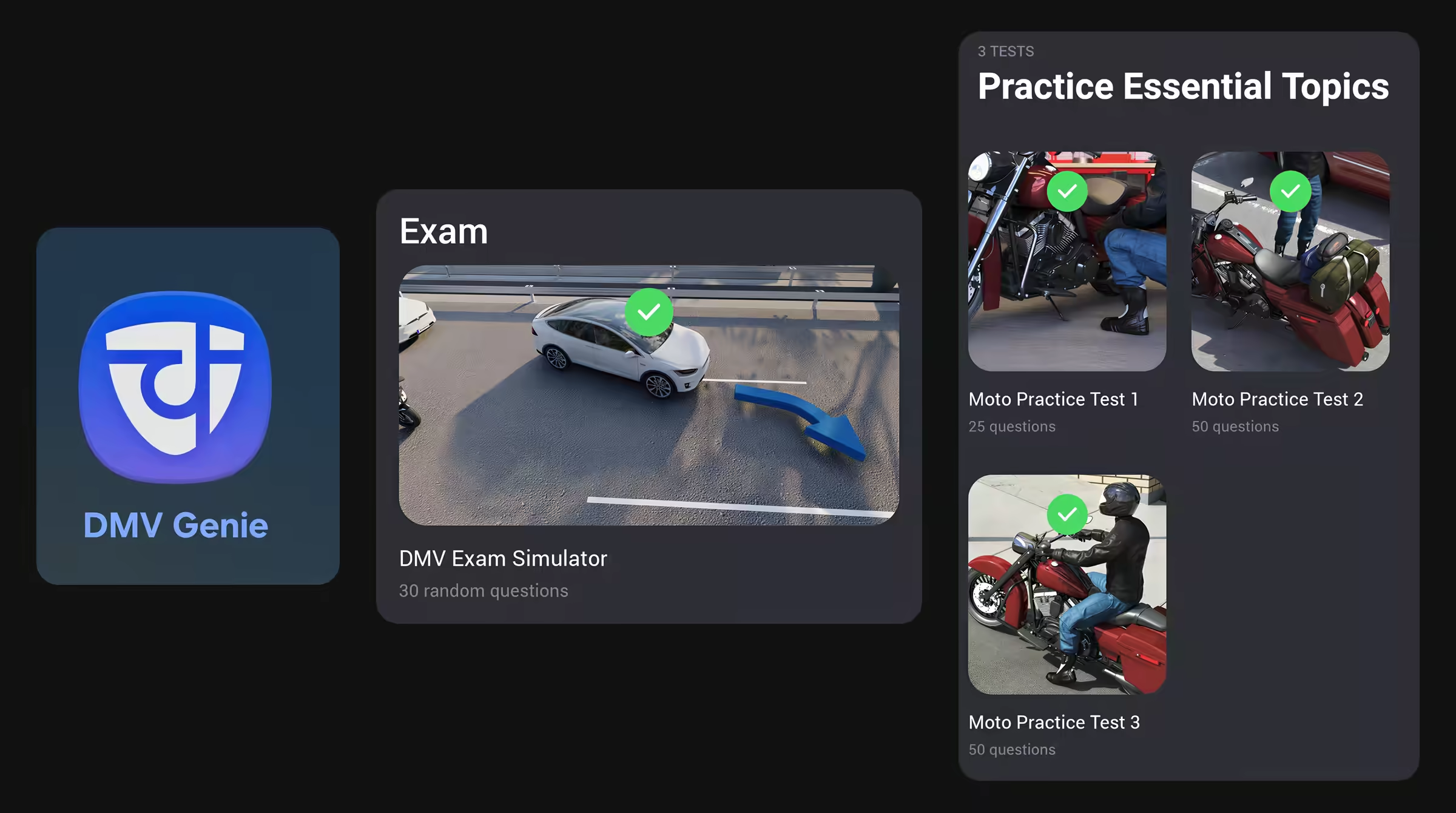
Written test. Multiple choice on your state’s motorcycle handbook: braking, curves, following distance, gear and alcohol. Personally, I downloaded an app to study faster, DMV Genie (App Store · Google Play); if you’d rather study from the handbook, you’ll find it free on your state DMV’s website.
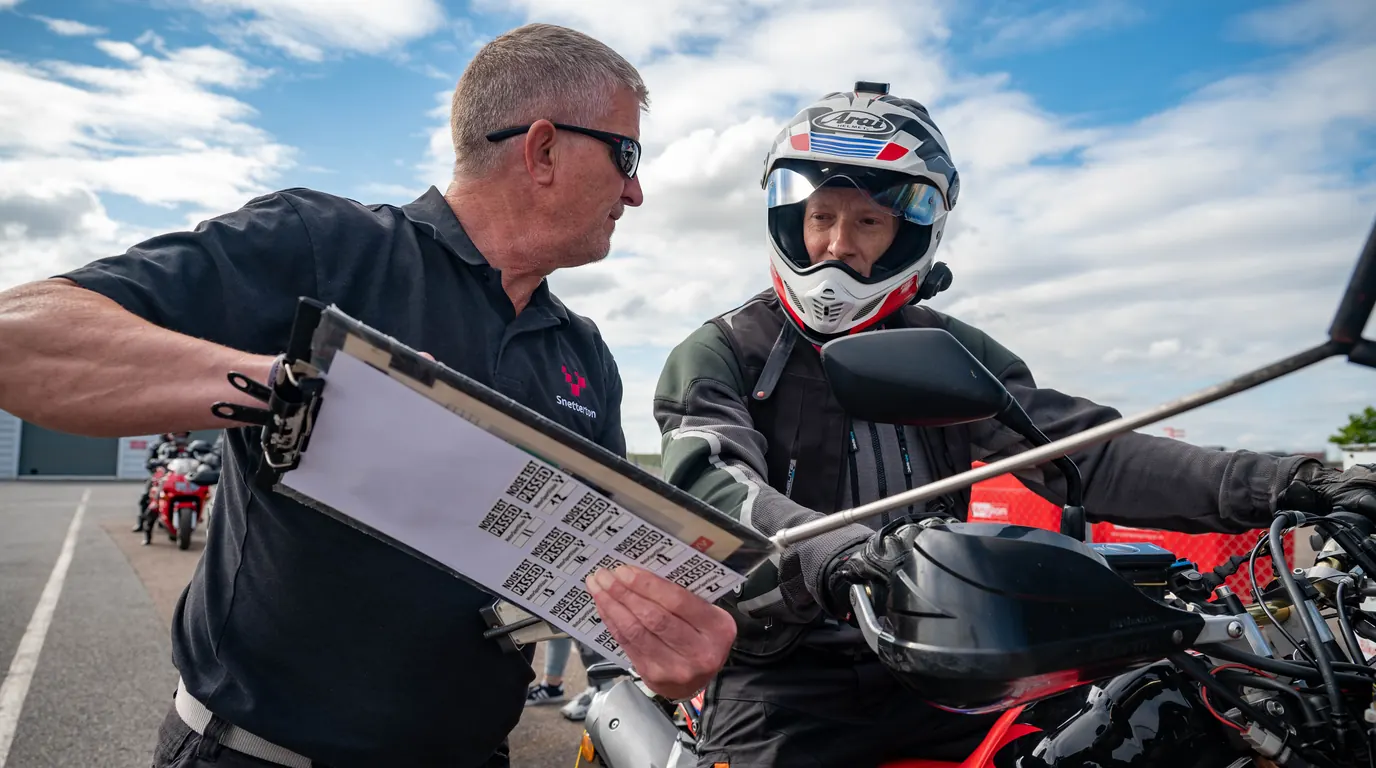
California says its knowledge test is available in more than 40 languages. Other states offer it in Spanish, only with an interpreter, or only in English. We didn’t find a single official list, so ask your DMV which languages the motorcycle test comes in, since it isn’t always the same as the car test.
Riding test, or a course that replaces it. This is the shortcut that saves the most nerves. In many states, an approved course replaces the riding test, and in some it replaces the written test too. The best known is the Basic RiderCourse from the Motorcycle Safety Foundation (MSF): when you pass, you get a little yellow form that shows you completed the basic course, and that’s what you show at the DMV. Three caveats:
- The MSF makes clear that its course can fully or partially replace the test, depending on the state. Its online-only course, the Basic eCourse, doesn’t replace anything in any state.
- In California, if you’re 21 or older you can choose between the course and the DMV riding test. The course gives you a certificate (DL 389) that replaces the test if you use it within 12 months. The state program is run by the CHP.
- In Texas, the certificate from an approved course is good for 24 months and lets you skip the knowledge test. The riding test is required for minors and for adults who don’t hold a current, unrestricted Texas Class A, B or C license, according to the Texas DPS. Texas also requires you to meet the REAL ID requirements.
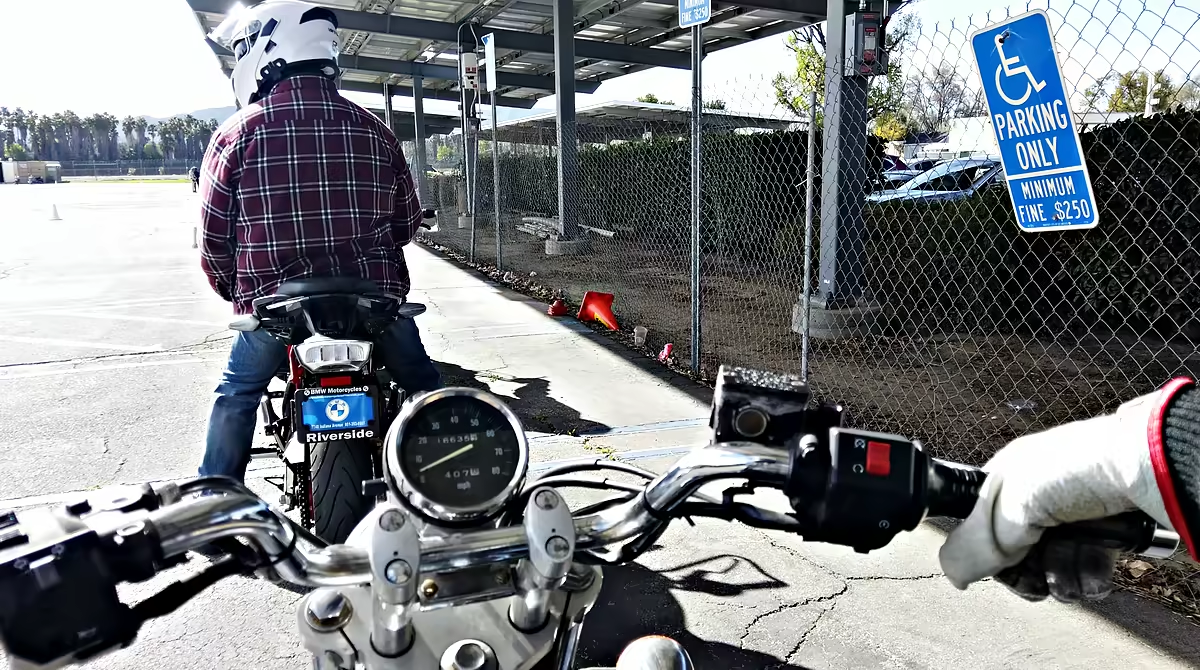
The paperwork. With the course certificate or a passed test, you pay the fee, get your photo taken, and get a temporary license while the permanent one arrives. In California the temporary motorcycle license is good for 60 days; for the riding test they ask for proof of insurance, and the fee covers three attempts. If it’s your first bike, take the course even if your state doesn’t require it: in Getting started we tell you why.
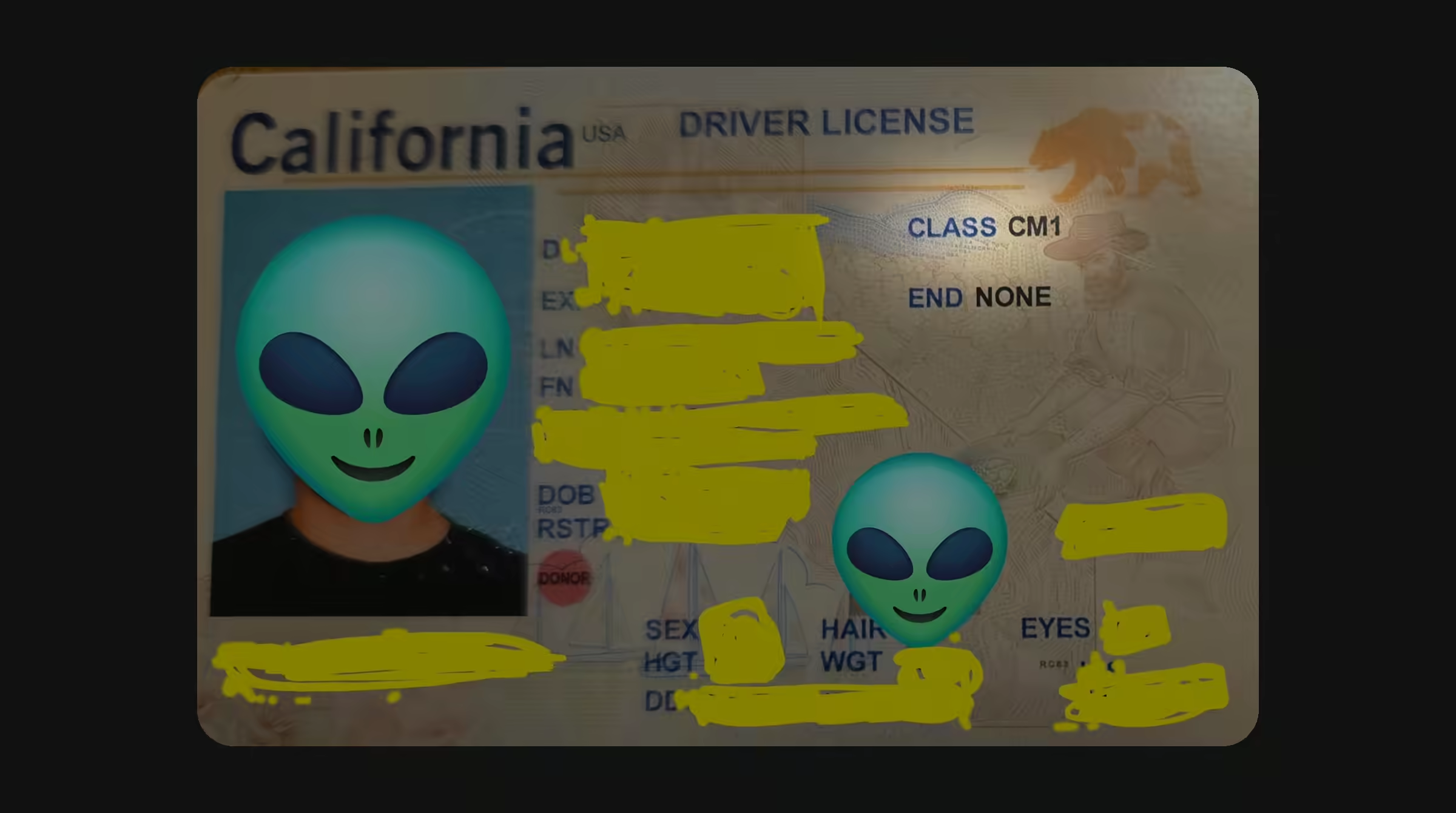
In California, when your license arrives, check two boxes: 9 (CLASS), with your classes, and 9a (END), with your endorsements. For a motorcycle, M1 or M2 has to show up in one of the two (in other states, M).
Here’s how it looks on mine: the class box says CM1, the C for car plus the M1 for motorcycle, and the endorsements box says NONE.
What to bring to the DMV
Each state publishes its own list. This is the typical one, always originals:
- Identity: passport, birth certificate, Mexican consular ID (matrícula consular) or another document your state accepts.
- Address: two proofs, like a utility bill, a lease or a bank statement.
- Social Security number, or proof that you’re not eligible for one, if your state asks for it.
- Your current license and the course certificate, if it applies.
- Insurance for the bike, if the riding test is on your own bike, and the fee payment.
- For REAL ID, if you want one, proof of lawful status in the country: citizenship, permanent residence, a work permit (EAD) or a valid visa with your I-94, according to the TSA. The matrícula consular doesn’t count for REAL ID.
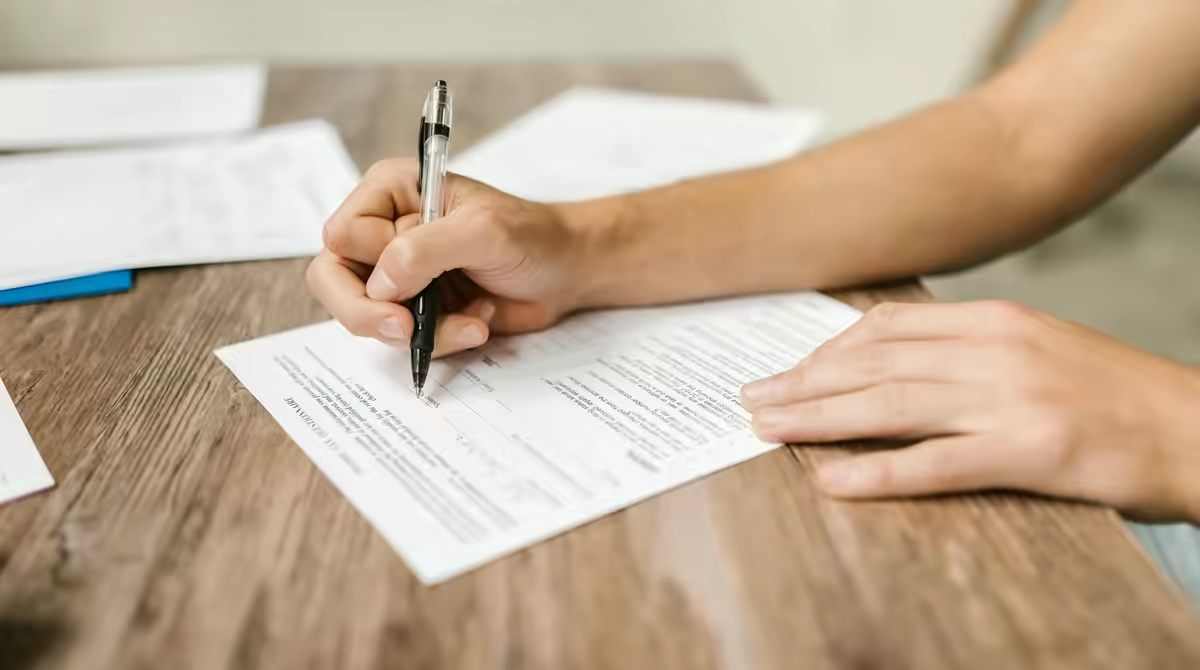
A license regardless of immigration status
According to the National Conference of State Legislatures (NCSL), 19 states and the District of Columbia have laws that let people without authorized immigration status get a driver’s license: California, Colorado, Connecticut, Delaware, Hawaii, Illinois, Maryland, Massachusetts, Minnesota, Nevada, New Jersey, New Mexico, New York, Oregon, Rhode Island, Utah, Vermont, Virginia and Washington.
That NCSL page was last updated in March 2023, and we didn’t find an official source confirming there are still 19 as of October 2026. On top of that, some states don’t recognize these licenses when another state issues them: if you leave yours on the bike, check the rules where you’re going.
In California, the DMV describes the AB 60 license as the one for people who meet the requirements but can’t prove legal presence, and the page doesn’t put restrictions on class. For a motorcycle, the path is the same as for anyone: the motorcycle test and the riding test or the course certificate.
REAL ID. Since May 7, 2025, according to the TSA, you need a REAL ID or another accepted ID, such as a passport, to board domestic flights. “Federal Limits Apply” licenses work for driving, but not for flying. AB 60 applicants aren’t eligible for REAL ID, according to the California DMV. For the motorcycle, nothing changes: the Class M gets added the same way.
If you come to the U.S. with a license from another country
As a visitor, many states let you drive for a while with your home country’s license, sometimes with an International Driving Permit (IDP) or a translation if it isn’t in English. The sources we checked talk about six months or a year, but there’s no nationwide number. Heads up: a foreign license that only covers cars does not let you ride a motorcycle in the U.S.
If you move here, your foreign license stops being valid after the period your state sets, and for the motorcycle you’ll need the test or the course. Get an insurance quote before you buy the bike: some insurers want to see a Class M before they’ll write you a policy. If you haven’t picked a bike yet, check out the best motorcycles for beginners.
 Canada: every province has its own system
Canada doesn’t have a national license either: each province has its own program, classes and timelines. We looked at the four most populous provinces. The table sums up what people ask about most:
| Province | Visiting with your motorcycle license | If you bring a U.S. motorcycle license | If you bring a Mexican motorcycle license |
|---|---|---|---|
| Ontario | Up to 3 months | Full Class M without tests, with 2 years of riding experience in the last 3 | No exchange: written tests; with 2 years of experience you go straight to the level 2 road test |
| Quebec | Up to 6 consecutive months | It’s exchanged, but the motorcycle requires passing tests | No exchange agreement: tests |
| Alberta | Up to 1 year | Class 6 without tests | No exchange agreement: tests |
| British Columbia | Up to 6 months as a tourist | The U.S. is on its exchange list; confirm with ICBC whether that includes the motorcycle | Not confirmed: ask ICBC |
Ontario: M1, M2 and M
In Ontario, the motorcycle license comes in three stages, starting at age 16, according to the official guide:
- M1. You get it with a vision test and a written test, and it’s valid for 90 days. You have to wait at least 60 days before your first road test. On an M1: zero alcohol, daylight riding only (from half an hour before sunrise to half an hour after sunset), no passengers, and no roads with speed limits over 80 km/h, except some designated highways.
- M2. You get it when you pass your first road test. Now you can ride at night and on any road, but alcohol is still zero.
- M. You get it with the second road test, after 22 months on the M2, or 18 if you took a recognized safety course.
As a visitor, you can ride for up to 3 months with your state, province or country license, if you’re 16 or older and insured, according to the visitors page. The motorcycle handbook makes clear that your home license has to be a motorcycle license. If you’re coming from another country and staying more than 3 months, you need an IDP, issued before you arrive: you can’t get one in Ontario anymore.
If you move, the handbook gives you 60 days on your out-of-province motorcycle license. To exchange it:
- With a license from a U.S. state and at least 2 years of riding experience in the last 3, you get a full Class M without a written or road test. This doesn’t apply to three-wheelers or limited-speed motorcycles.
- With a license from Mexico (which isn’t on the agreement lists), you take the vision test and the written tests. With 2 or more years of experience, you go straight to the level 2 road test; with less, you start at M1.
Quebec: 6A, 6B and 6C, with a mandatory course
The SAAQ has three motorcycle classes: 6A for any motorcycle, 6B up to 400 cc and 6C up to 125 cc. The minimum age is 16, with permission from a parent or guardian if you’re under 18.
Quebec is the strictest of the four:
- The course is mandatory, at a recognized school, and lasts at least 30 days: 3 hours of theory and 16 of practice on a closed course, plus 3 of theory and 10 of practice on the road, in full gear.
- Passing the knowledge test gets you the 6R learner’s license, valid for 18 months. Then comes the closed-course test, and after 11 months as a learner, the road test.
- The probationary license lasts 24 months; after that you get the full one.
- As a learner you can’t ride between midnight and 5 a.m., carry a passenger or have a drop of alcohol.
The SAAQ lists approximate costs in Canadian dollars: $13.50 for the knowledge test, $33.75 for the closed-course test and $119 for the road test. The learner’s license can run as high as $624.80, depending on the month it’s issued.
As a visitor, if you don’t live in Quebec, you can drive on your valid license for up to 6 consecutive months, according to an SAAQ document. If you move from the U.S., you have 12 months to request the exchange: the car license is exchanged without a test, but the motorcycle only after you pass the tests. Mexico doesn’t have an exchange agreement with Quebec.
Alberta: Class 6 and a year as a visitor
In Alberta, the motorcycle license is Class 6, starting at 16. To get it you need a full Class 5 (car) or to have held the Class 7 learner’s license for at least a year. There’s a knowledge test at a registry office and a road test, which you take on your own bike with a cell phone and earbuds so you can hear the examiner. If you take it on a three-wheeler, your license is restricted to three wheels.
New riders enter the graduated licensing program (GDL): two years of probationary license, zero alcohol, and a suspension at 8 demerit points. An approved course can knock up to 6 months off. As a learner, riding at night is prohibited and you have to ride with a supervisor who holds a full Class 6.
Alberta is the most generous with visitors: up to a year on your home license, in the same vehicle class, according to the exchange page. If your license isn’t in English, they recommend bringing an IDP. If you move, you have 90 days to exchange it, and a U.S. license is exchanged without tests, Class 6 included. Mexico isn’t among the exchange agreements.
British Columbia: rules in the middle of an overhaul
In British Columbia, ICBC has two paths. If you already have a BC license, you start with the 6L learner’s license (supervisor in sight, 60 km/h max, no passenger, daylight only), and after a month you can take the Class 6 test. If you don’t have a license, you go through the 8L (at least 12 months) and the 8N novice license (24 months) before you get to Class 6.
The provincial government announced in April 2025 a new program for motorcyclists, with 9 months as a learner (6 with a course) and 18 months on a restricted license (12 with a course). It was planned for early 2026, but ICBC’s March 2026 guide still describes the old rules. Before you start, confirm with ICBC which ones apply.
As a tourist, you can drive on your license for up to 6 months. If you move, you have 90 days to exchange it, according to ICBC. The U.S. is among the places whose licenses can be exchanged, but the page doesn’t make clear whether that includes the motorcycle class: ask when you book your appointment.
Riding from the U.S. into Canada
- If you’re a U.S. citizen, Canada recommends a passport. Bring it, or your passport card, because you’ll need it to get back into the U.S.
- If you’re a U.S. permanent resident, bring your valid green card and your home country’s passport.
- If you’re a Mexican citizen without U.S. residency, you need a Canadian visitor visa, even if you enter by land, according to the entry requirements. The electronic travel authorization (eTA) only works if you arrive by air.
Your bike can come in for personal use without meeting Canadian standards, according to Transport Canada, for the length of your stay. Customs (CBSA) mentions up to 12 months and warns that it can turn away modified motorcycles. Bring the title or registration in your name and confirm with your insurer that your policy covers you in Canada.
 Mexico: one license per state
In Mexico, licenses are up to each state. The General Law on Mobility and Road Safety (in Spanish), from 2022, sets the floor for the whole country:
- Article 49, section I: you need a valid license suited to the type of vehicle. A car license is not a motorcycle license.
- Article 49, section IX: helmets are mandatory for the rider and the passenger.
- Article 49, section XII: motorcycle riders have a lower alcohol limit than car drivers: 0.1 milligrams per liter of exhaled air, versus the general 0.25.
- Article 51: to get or renew a license you have to pass a comprehensive assessment and a written and practical test.
Mexico City: A1 or A2, with a certificate
In the capital, the A1 license is motorcycle-only and the A2 covers motorcycles and cars. There’s no license without a passing evaluation certificate from a certified center: they inspect your bike, helmet and gear, and give you a knowledge test and a riding test. They also ask for official ID with your CURP (Mexico’s national ID number), proof of address in Mexico City or the State of Mexico less than 3 months old, the paid payment slip (línea de captura) and an appointment through Llave CDMX.
The official fee table from the Finance and Administration Department (in Spanish) lists 572 pesos for a three-year A1 and 1,142 pesos for the A2. Some Semovi service pages show lower figures, 525 and 1,049. Check the amount on your payment slip before you pay. The permanent license, which came back in November 2024, is for cars: according to the press, it doesn’t cover motorcycles.
Jalisco and the other states
In Jalisco (in Spanish), a new motorcycle license requires passing a motorcycle road safety course, the knowledge test and the practical riding test. The documents are a valid official ID, proof of address less than 3 months old, a printed CURP from the current year, and your blood type. The reference cost is 600 pesos for a new license and 500 for a renewal. If you’re a foreigner, they ask for your passport and a valid immigration document.
In the State of Mexico, Nuevo León and Baja California, the official information we found was out of date or wouldn’t load, so we’re not giving you numbers. The general rule repeats: a test, proof of address in the state and an in-person appointment.
If you live in the U.S. and want a Mexican license
The requirements we checked (Mexico City and Jalisco) ask for proof of address in the state and an in-person appointment. Mexican consulates in the U.S. don’t issue driver’s licenses. If you don’t have an address in Mexico, there’s no way to get one remotely.
If you visit Mexico with a U.S. or Canadian license
We didn’t find a federal rule that spells it out. Insurers and travel guides agree that tourists can drive on their home country’s valid license for the length of their stay, and the law requires the license to be “suited to the type of vehicle.” In practice: bring a license with a motorcycle class, your passport and your bike’s paperwork.
What about the IDP? According to the UN Treaty Collection, Mexico isn’t a party to the 1949 Geneva Convention and signed the 1968 Vienna Convention without ratifying it. In Mexico, the IDP doesn’t carry the weight of a treaty, but if your license isn’t in Spanish or English, it doesn’t hurt to bring one.
Bringing your bike in: the Banjercito permit
If you cross with your foreign-plated bike beyond the border zone, you need a temporary import permit. ANAM (in Spanish) makes clear that a motorcycle that rides in, with foreign plates and for use on public roads, needs its own permit, with the same requirements as a car. Recreational motorcycles that aren’t street-legal can be listed on another vehicle’s permit, up to three.
According to the Banjercito page (in Spanish), updated in September 2026:
- Cost: $51 plus VAT at service modules and consulates, or $45 plus VAT online.
- Guarantee deposit: $400 if the vehicle is a 2007 or newer, $300 if it’s 2001 to 2006, and $200 if it’s 2000 or older. The page doesn’t give a separate amount for motorcycles. You get it back if you register your exit before the permit expires.
- Validity: for foreigners, the length of their immigration stay. For Mexicans living abroad, 180 days with multiple entries and exits over 12 months.
- Paperwork: passport (or a U.S. resident card or work visa, if you’re a Mexican living there), proof of ownership and the signed return commitment letter.
Your U.S. insurance usually doesn’t cover you in Mexico: buy a Mexican policy before you cross. If you’re only going to the border zone or the free zone, the rules may be different; ask at the module.
 European Union: same categories, each country’s rules
In the European Union the categories are the same in all 27 countries, but exchanging licenses from outside the EU, how long visitors can ride, and riding a motorcycle on a car license are up to each country. The categories, according to Your Europe and Spain’s regulations:
| Category | What you can ride | Minimum age |
|---|---|---|
| AM | Mopeds up to 45 km/h and light quadricycles | Varies by country; in Spain, 15 |
| A1 | Motorcycles up to 125 cc and 11 kW, with no more than 0.1 kW per kg | 16 |
| A2 | Motorcycles up to 35 kW, with no more than 0.2 kW per kg | 18 |
| A | Any motorcycle | 20 with 2 years on an A2, or 24 if you go straight to it |
The ladder makes sense: with 2 years on an A2 you move up to A without starting from scratch. In Spain, on top of that, moving up to A requires a course, according to a DGT press release (in Spanish) from March 2025.
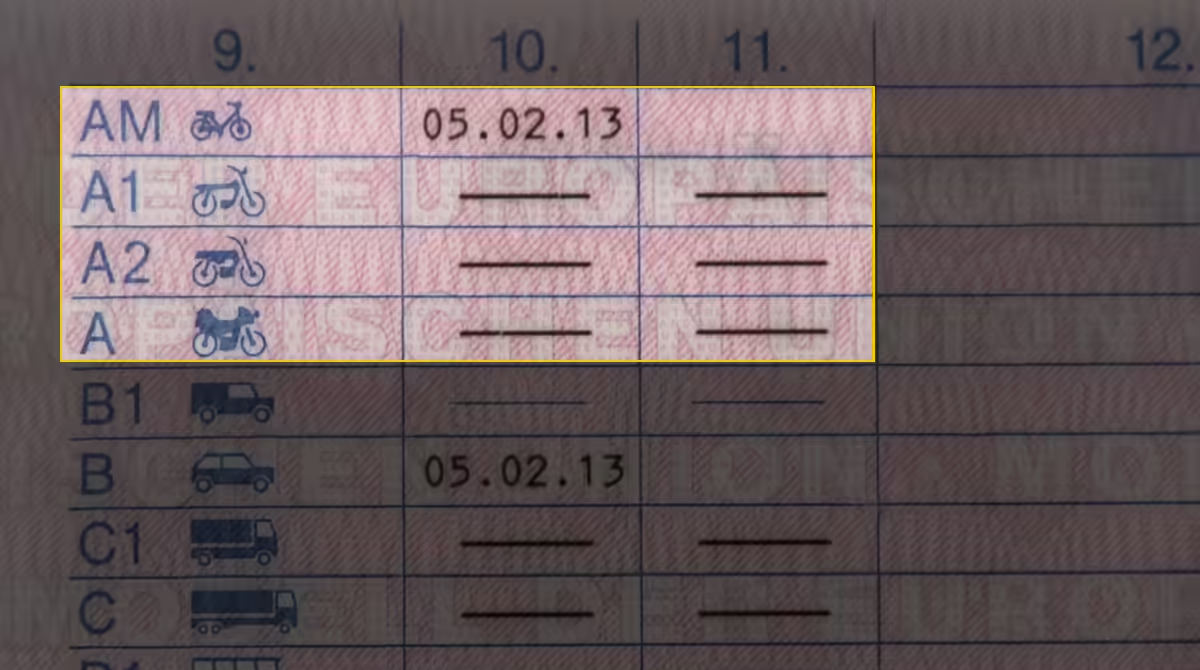
On the back of the license, the common EU format gives each category its own row: column 10 shows when you got it and column 11 how long it’s valid. The motorcycle categories are the first four rows; if the A1, A2 or A row only has dashes, you don’t have that category.
A 125 on a car license?
It depends on the country, and it never crosses the border:
- Spain: with a B license held for more than 3 years you can ride A1 motorcycles, only inside Spain, according to the driver regulations (BOE).
- France: with a B license held for at least 2 years and 7 hours of practical training (2 of theory, 2 off the road and 3 on the road) at an approved driving school, according to Service-Public. The page estimates €250 to €300.
- Germany: with code 196 on your B license. It requires being 25, 5 years with a B license and 9 sessions of 90 minutes at a driving school (4 theory and 5 practical), with no test. It’s only valid in Germany, according to Hamburg’s public services portal.
These authorizations are for licenses from those countries. With a U.S. or Mexican car license, don’t count on them to rent a 125 scooter.
The new EU directive, no rush
In November 2025 the EU published Directive (EU) 2025/2205, which replaces the 2006 one. According to the European Commission’s implementation strategy, countries have until November 26, 2028 to write it into their laws, and it applies from November 26, 2029. What matters most for riders:
- Motorcycle and car licenses will be valid for 15 years (10 today).
- There will be a probationary period of at least 2 years for new drivers, with stricter alcohol rules.
- Your license will come to your phone, without losing the right to a physical card.
- The Commission will be able to assess non-EU countries and set common exchange conditions. The first assessments would start in 2027, and it’s not yet known which countries will be included.
Until 2029 the old directive is in charge and, with it, each country’s rules.
Visiting or moving
- Spain. For tourists, the DGT recommends an IDP from your home country. If you become a resident, your foreign license is valid for 6 months, in Spanish, with an official translation or in international format.
- France. As a tourist, up to 185 days on your license plus an IDP or an official translation if it isn’t in French. If you move, you have a year to exchange it, according to Service-Public. Category A isn’t granted by exchange: you get A2 and then move up with the training.
- Germany. If you don’t live there, you can drive on your foreign license. If you move from outside the EU, you keep that right for 6 months, according to section 29 of the German driving license regulation, extendable by up to 6 more months if you show you won’t live there for more than a year.
- Italy. If you become a resident, your foreign license is valid for one year from your residence, with an IDP or official translation, according to the Ministry of Infrastructure and Transport.
Exchanging your license: where yes and where no
Here’s the bad news if your license is from the U.S. or Mexico:
- Spain has exchange agreements with 33 countries, according to the DGT list updated in June 2026. The U.S., Mexico and Venezuela aren’t on it: you have to pass the Spanish tests. Argentina, Bolivia, Brazil, Chile, Colombia, Costa Rica, Ecuador, El Salvador, Guatemala, Honduras, Nicaragua, Panama, Paraguay, Peru, the Dominican Republic and Uruguay are. The fee is €28.87, although the table doesn’t make clear which motorcycle category you keep when you exchange.
- Italy only exchanges U.S. licenses for diplomatic staff and their families. Mexico, Colombia, Peru and Venezuela have no exchange; Argentina, Brazil, El Salvador and Uruguay do.
- Germany exchanges licenses from about 40 U.S. states, but almost always only for cars, according to annex 11 of the regulation. Motorcycle licenses are exchanged in a handful of cases, like Virginia’s Class M or British Columbia’s Class 6, which converts to A2 or A depending on your age. Mexico isn’t on the list: you’ll have to take the test.
- France exchanges licenses based on a reciprocity list published by the Sécurité routière, which we couldn’t review in full. Ask at the prefecture before you count on an exchange.
Renting a motorcycle in Europe with a U.S. or Mexican license
Bring your valid license with a motorcycle class, an IDP and your passport. If you’re from the U.S., the IDP is issued by AAA or AATA. If you’re from Mexico, ask in your state and with the rental company. The bike you rent has to fit what your license allows, and each company sets its own rules on age and how long you’ve held your license. Before you pay, ask in writing which category (A1, A2 or A) they’ll recognize on your license.
The comparison in one table
| United States | Canada | Mexico | European Union | |
|---|---|---|---|---|
| Who sets the rules | Each state | Each province | Each state, with a federal floor | The EU sets the categories; each country, the rest |
| Motorcycle license | Class M or M endorsement | M (Ontario) or Class 6 | A1 or A2 (Mexico City) | A1, A2 or A |
| Stages | Learner’s permit in many states | Yes: 2 to 3 stages, with probationary years | No: test and certificate | Yes: A1, A2 and A by age and experience |
| Visiting on an out-of-country license | Period set by each state | 3 months to 1 year | No explicit federal rule | Depends on the country; an IDP helps |
| Exchanging a U.S. license | Doesn’t apply | Ontario and Alberta, without tests | No exchange: state process | Not in Spain or Italy; Germany, almost only cars |
| Exchanging a Mexican license | No: local test | No: tests | Doesn’t apply | Not in Spain, Italy or Germany |
Frequently asked questions
Does my Texas Class M work for riding in Toronto?
As a visitor, yes, for up to 3 months. If you move to Ontario and have at least 2 years of riding experience in the last 3, you exchange it for a full Class M without tests.
Is my Mexican motorcycle license valid in Canada?
As a visitor, within each province’s time limit and as long as it’s a motorcycle license. In Ontario, if you stay more than 3 months, you also need an IDP obtained in Mexico before you travel. If you move, there’s no exchange: you’ll have to take the tests.
Can I rent a 125 scooter in Spain with my U.S. car license?
Don’t count on it. Riding a 125 on a car license is for Spanish B licenses held for more than 3 years, and it only applies in Spain. With a U.S. or Mexican license, the safe bet is a license that includes motorcycles.
Can I get a Mexican license from the U.S.?
Not remotely. The states ask for proof of a local address and an in-person appointment, and consulates don’t issue driver’s licenses.
Do I need an International Driving Permit?
It depends on where you’re going. In Ontario it’s mandatory if you come from another country and stay more than 3 months. Alberta recommends it if your license isn’t in English, and France and Italy require it, or an official translation, if your license isn’t in their language. Spain recommends it for tourists. Get it before you leave: in the U.S., according to the State Department, only AAA and AATA issue it. And if your license doesn’t include motorcycles, the IDP won’t add them.
Can you ride a motorcycle with an AB 60 license?
The California DMV describes the AB 60 as a driver’s license for people who meet the requirements but can’t prove legal presence, and the M1 class is earned with the motorcycle tests. For flying, on the other hand, it won’t help you: it isn’t eligible for REAL ID.
Before you hit the road
I’ve been doing some digging on the “international license,” which is actually called the International Driving Permit (IDP). It doesn’t replace your license: it’s a translation you carry along with it, and it helps you drive in another country if that country’s rules recognize it. In the U.S., the one AAA issues lasts one year from the date it takes effect, or less if your license expires first.
Licenses are the boring part of riding, but a mistake there can cost you your bike, your insurance or a ticket in a country where you don’t know anyone. Before every trip or move, open the official page for where you’re going (not a forum), write down how long you can ride as a visitor, and ask whether your license can be exchanged before you commit to anything. And once the card is in your wallet, get back to what matters: confidence is built with practice.
Photos
Cover: Alexander Vasquez, U.S. Air Force, via Wikimedia Commons · Public domain.
Photo 1: screenshots of the DMV Genie app taken by the author; the app and its images belong to its developer.
Photo 2: the author’s personal archive.
Photo 3: the author’s license, with the details struck out.
Photo 4: RDNE Stock project, via Pexels · Pexels License.
Photo 5: Ali Kazal, via Pexels · Pexels License.
Photo 6: Abraham Castro, via Pexels · Pexels License.
Photo 7: Bundesministerium des Innern, sample license, via Wikimedia Commons · Public domain.
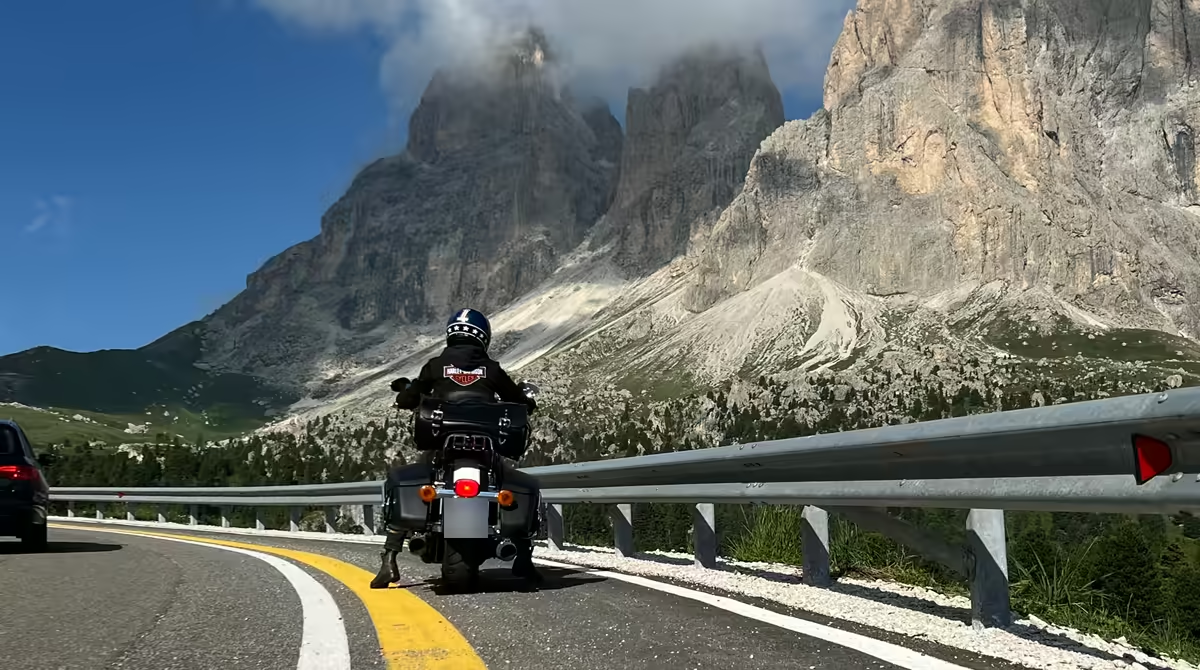
Photo 8: Valter Arici, via Pexels · Pexels License.
Flags: flag-icons, by Panayiotis Lipiridis · MIT License.

