Best motorcycles for beginners: a buying guide
You’re standing in front of the dealership window, or scrolling a Marketplace listing, and everything looks incredible. The red sportbike, the chrome cruiser, the adventure bike with hard cases. Your head says “that one,” but your feet, your wallet and your first hundred rides have other ideas. Your first bike isn’t the one that gets you most excited in the photo; it’s the one that lets you learn without fighting it.
Here are the criteria that actually matter, the five most common segments and specific models on sale in 2026 in the United States and Mexico. Prices are ballpark figures and they change.
The short version: First pick the bike you can control with both feet planted · 300 to 500 cc is plenty to start · ABS is worth it if you can afford it · Get an insurance quote before you buy · A well-inspected used bike is a perfectly good option
Before you look at models: your starting point
Three questions sort out everything else. What will you ride most of the time: city, highway, dirt? How tall are you and how much do you weigh? What’s your budget, counting gear, insurance and maintenance, not just the bike?
People forget that last one a lot. A certified helmet, a jacket with armor, gloves, boots and pants add up to real money, and they’re not optional. For the labels on your helmet, we have a guide to DOT, ECE 22.06, Snell, FIM and NOM certifications. And if you haven’t taken a course yet, do it before you buy or at the same time; in Getting started we tell you how.
The criteria that really matter
Seat height
When you go see that bike you’ve been drooling over, the first thing you should do is sit on it, with the permission of the dealer or the private seller, of course. When I was choosing my bike (a CB500X), the salesperson invited me to sit on every one that caught my eye, and believe me, I got carried away; that way I could test the height, the weight and whether I felt I could handle it.

A lot of riders say, and I think I agree, that this is criterion number one, ahead of power. If you can reach the ground with the soles of both feet when you stop, you’ll feel in control at every red light, every low-speed maneuver and every time you park on a slope. If you can barely touch with your toes, any speed bump or slip turns into a scare.
As a rule of thumb, flat-footed or with a slight bend in the knees handles better than tiptoeing.
Heads up: the number doesn’t tell the whole story. A tall seat that’s narrow up front can feel easier than a lower, wider one. Sit on the bike at the dealership, with your boots on.
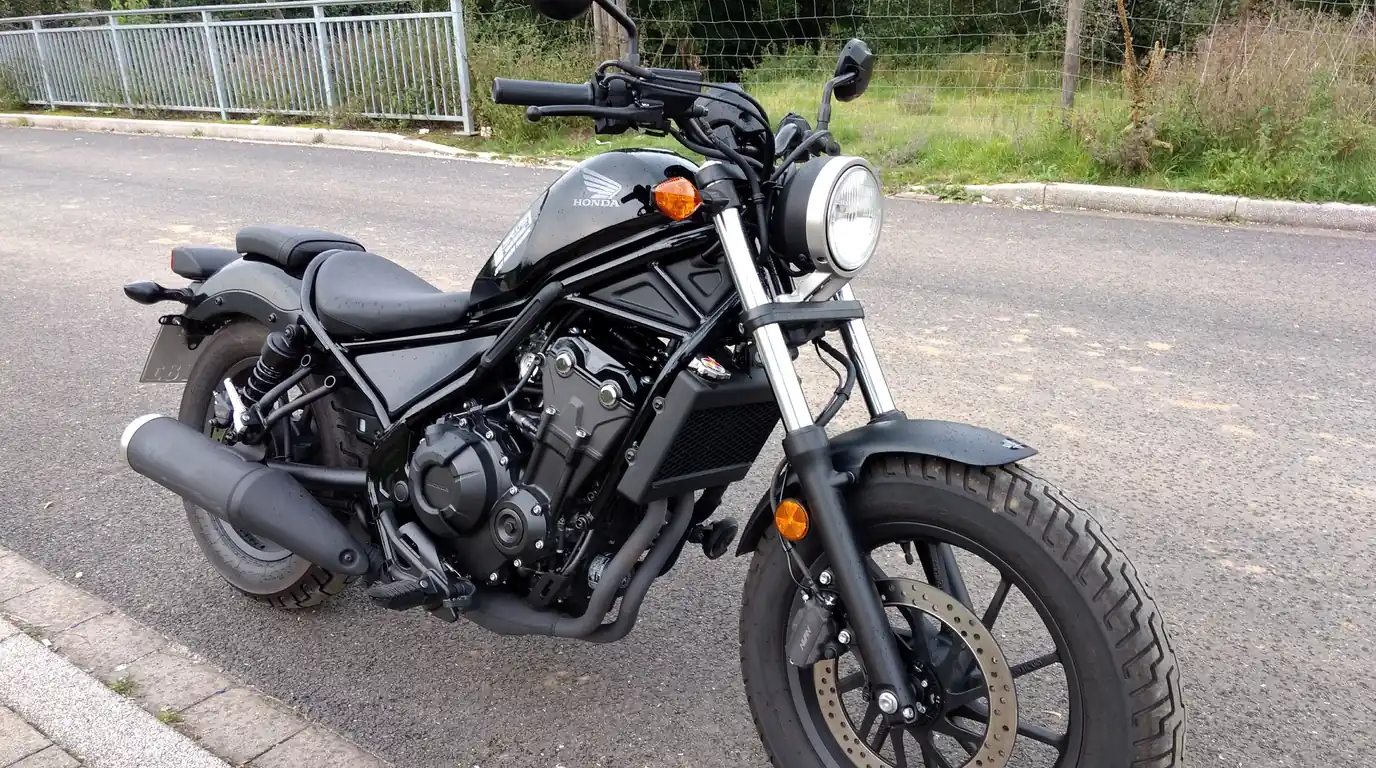
Light cruisers tend to be the friendliest here. According to the spec sheets we checked, the Honda Rebel 300 and Rebel 500 list a seat height of about 27.2 inches (about 690 mm), among the lowest on the market. At the other end, a dual-sport like the Honda CRF300L Rally lists 35.2 inches (about 894 mm), and you’ll feel it if you’re under about 5’7” (1.70 m).
Weight
A bike that weighs 350 to 420 lb (160 to 190 kg) ready to ride is much easier to pick up, back up and park than one that weighs 550 lb (250 kg). Think about the day you drop it at low speed: the weight decides whether you can pick it up on your own. The KTM 390 Duke, for example, comes in around 364 lb (about 165 kg) according to the spec sheets, and the Rebel 500 about 415 lb (about 188 kg) according to listings; always compare the same kind of figure (dry or curb weight).
Power and displacement
To learn, a bike from 150 to 500 cc is more than enough. More horsepower doesn’t make you a better rider; it just gives you more room to make mistakes fast. What you do want is smooth power delivery, a forgiving clutch and progressive brakes.
A 300 to 500 cc bike also holds its own on the freeway, something a 125 or 150 cc struggles with. If your daily ride is all city, a 150 or 200 cc is plenty and much cheaper to buy and maintain.
ABS
ABS keeps the wheel from locking up when you brake hard, and on a motorcycle a lockup usually ends in a crash. An analysis by the U.S. Insurance Institute for Highway Safety (IIHS) concluded that motorcycles with ABS are 31% less likely to be involved in a fatal crash than the same motorcycles without it; you can read the IIHS and HLDI petition and see the nuances. Other studies, like a 2010 NHTSA study cited in that same document, didn’t find a statistically significant effect, so it shouldn’t be sold as magic. Still, for a beginner who hasn’t mastered emergency braking yet, it’s reasonable insurance.
In the U.S., many entry-level models come with it. In Mexico, several 125 to 200 cc bikes are sold without ABS or with combined brakes: ask which version you’re getting. And practice braking with the drills we explain in Motorcycle confidence, with or without ABS.
Ergonomics
Riding position decides whether you enjoy it or suffer. A sportbike tips you forward and puts weight on your wrists; a naked bike keeps you upright; a cruiser puts your feet forward. None of them is better in the abstract. Check where your hands land, the reach to the levers (many are adjustable) and the mirrors.
Insurance and running costs
Insurance depends on your age, your record, your ZIP code or state, the bike’s value and its type. In general, a 300 cc sportbike can cost more to insure than a cruiser with the same displacement, but there’s no fixed rule. Get quotes from two or three insurers for the models on your list before you decide; sometimes it changes the answer. The same goes for Mexico: get a quote from the insurer and confirm with them what it covers.
New or used
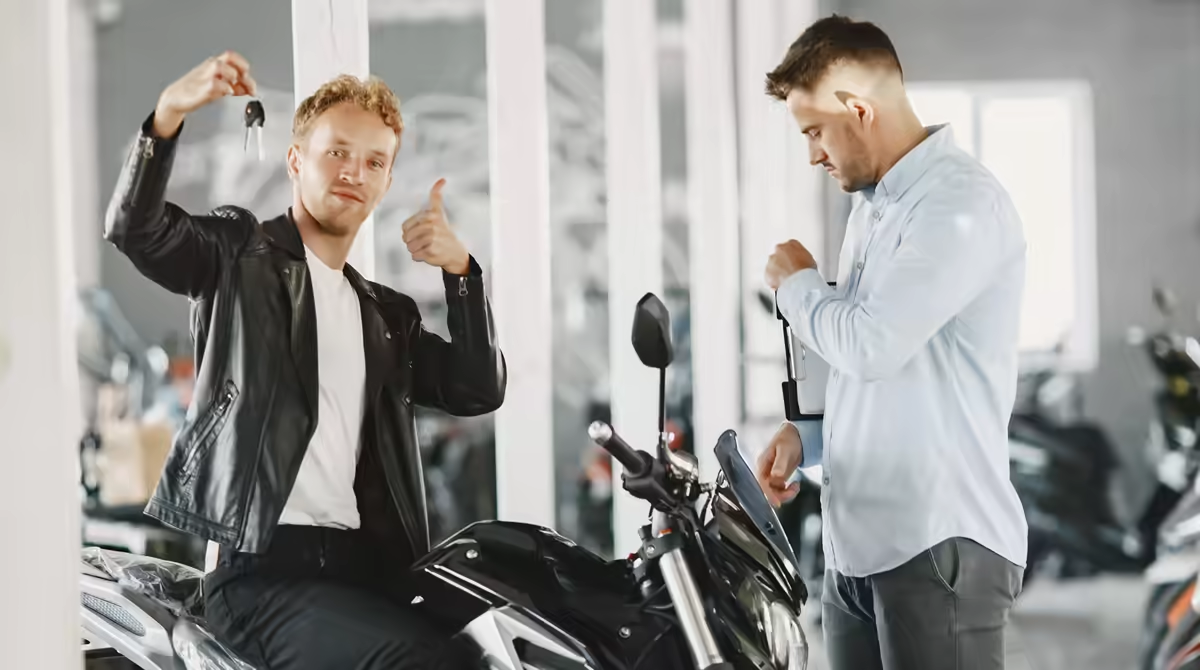
This is always one of the decisions we overthink the most. In my opinion, if it’s your first bike, I wouldn’t think twice: I’d go used, but in the best condition possible. Why used? Well, since it’s your first bike, it won’t hurt your wallet as much if you drop it: a little abuse on your learner bike stings less if it’s second- or third-hand.
A new one comes with a warranty, zero hidden history and, often, financing, sure, but I’d save that option for when you have more experience, have the technique more or less down and trust your skills. A used bike loses less value per year and lets you buy a better bike for the same money. Trust me, when the first drop comes, the scratch doesn’t hurt as much.
If you’re buying used, check:
- Paperwork: a clean title or bill of sale, a VIN that matches the bike, and no liens.
- Structure: straight handlebars and fork, no impact marks on the frame.
- Mechanicals: a cold start with no smoke or strange noises, chain and tires with life left in them, clean brake fluid.
- History: documented service and, if you can, the opinion of a mechanic you trust before you pay.
Be wary of the “like new” bike that’s really cheap and doesn’t have complete paperwork.
The five segments, explained
Naked
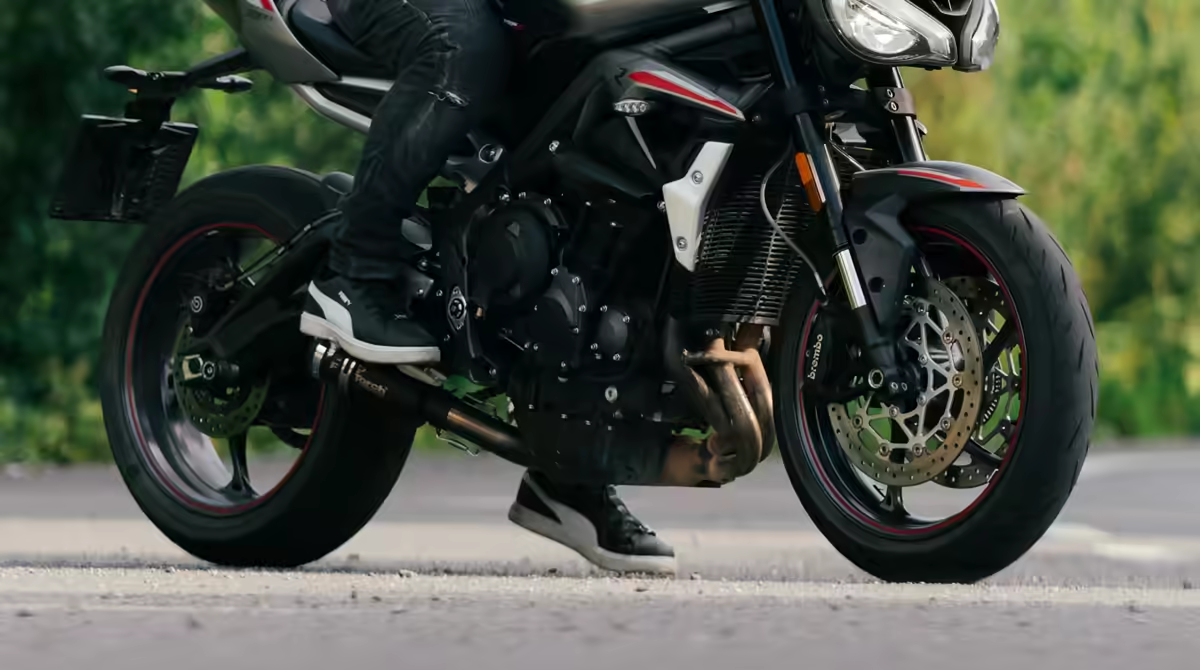
Bikes without a full fairing, with an upright riding position and wide handlebars. They give you good visibility, they’re nimble in the city and they handle naturally. Examples: Yamaha MT-03, Kawasaki Z500, KTM 390 Duke, Honda CB190R, Bajaj Pulsar NS200 and Yamaha FZ. With no windscreen, the wind on the freeway wears you out.
Cruiser
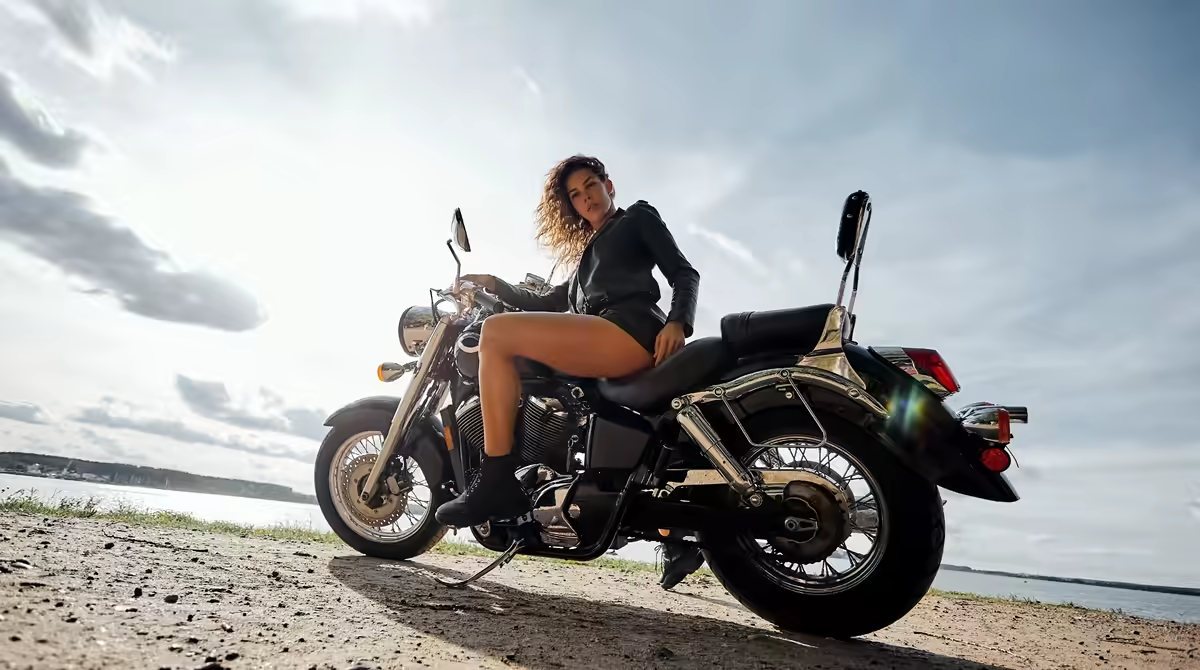
Low seat, feet forward, comfortable and easy to get used to. Good if you’re on the shorter side or prefer cruising to hard acceleration. Examples: Honda Rebel 300 and 500. In Mexico there are entry-level chopper-style options like the Italika TC250. Their limit: they don’t lean as far in corners.
Dual-sport
Long suspension travel, a tall seat, tires with moderate knobs. They work for city, highway and dirt. For a beginner they cut both ways: they handle bad roads really well and give you a high view of traffic, but the tall seat is a challenge if you’re shorter. Examples: Honda CRF300L, Royal Enfield Himalayan 450.
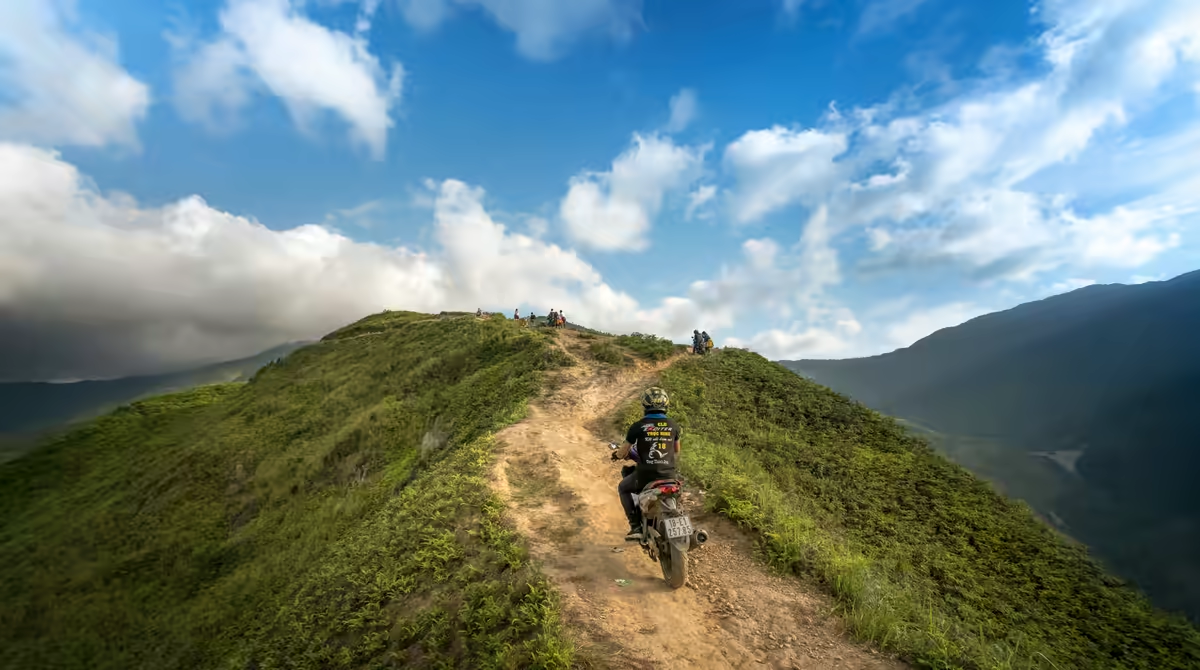
As for the CRF300L Rally, Dirt Rider reported that its 2026 price holds at $6,499 MSRP.
Sport
Full fairing, a leaned-forward position, sharper brakes and suspension. Entry-level sportbikes like the Kawasaki Ninja 500 or the Yamaha YZF-R3 are more docile than they look, but the riding position takes its toll in slow traffic. They make sense if you love twisty roads.
Scooter
Automatic, with storage under the seat and a flat floorboard. They’re the best tool for the city: zero clutch, zero shifting. The downside is that small wheels are more sensitive to potholes, and many 125 to 150 cc scooters struggle on the freeway. In Mexico the scooter lineup is wide and cheap (Italika, Vento and other brands have them).
Models you can find in 2026
A reference table. The U.S. data comes from manufacturer spec sheets, specialist media and dealer listings checked in October 2026; prices are approximate list prices (MSRP) without the destination charge or dealer fees, so the final total is higher.
| Model | Segment | Displacement | Seat height | Approximate price |
|---|---|---|---|---|
| Honda Rebel 300 | Cruiser | 286 cc | 27.2 in (690 mm) | about $5,349 |
| Honda Rebel 500 | Cruiser | 471 cc | 27.2 in (690 mm) | about $6,799 |
| Kawasaki Ninja 500 | Sport | 451 cc | 30.9 in (785 mm) | about $5,399 |
| Kawasaki Z500 SE ABS | Naked | 451 cc | 30.9 in (785 mm) | about $6,399 |
| Yamaha YZF-R3 | Sport | 321 cc | 30.7 in (780 mm) | about $5,499 |
| Yamaha MT-03 | Naked | 321 cc | 30.7 in (780 mm) | about $4,999 |
| KTM 390 Duke | Naked | 399 cc | 32.3 in (820 mm) | $5,500 to $6,500 |
| Royal Enfield Hunter 350 | Classic naked | 349 cc | 31.1 in (790 mm) | about $4,299 |
| Royal Enfield Himalayan 450 | Dual-sport | 452 cc | 32.5 in (825 mm) | about $5,999 |
| Honda CRF300L Rally | Dual-sport | 286 cc | 35.2 in (894 mm) | about $6,499 |
| Honda CB190R | Naked | 184 cc | see the spec sheet | around 64,000 pesos |
| Yamaha FZ-S FI 2.0 | Naked | 149 cc | see the spec sheet | around 55,000 pesos |
| Italika FT150 | Work and city | 150 cc | see the spec sheet | about 20,000 pesos on sale |
| Vento Tornado 300 | Naked | 300 cc | see the spec sheet | about 34,000 pesos in store |
The peso prices come from dealerships and online stores, with promotions that change every month. For the KTM we give a range because our sources didn’t agree. We couldn’t confirm the price of the Suzuki Gixxer 250 or the Bajaj Pulsar in Mexico with an official source: ask the dealership, because the figures we saw online were all over the place.
For riding in the U.S.
The Honda Rebel 300 is the classic first bike for shorter riders or anyone who wants to take it easy. The Rebel 500 gives you more pull without raising the seat. If you prefer a naked bike, the Yamaha MT-03 and the Kawasaki Z500 are docile options with a good riding position, while the KTM 390 Duke is livelier and demands respect with the throttle. The Royal Enfield Hunter 350 is simple, affordable and full of retro character; the Himalayan 450 adds standard ABS and adventure capability, although its seat is tall, according to Motorcycle.com’s spec sheet. For anyone who wants a sportbike without suffering, the Yamaha YZF-R3 and the Ninja 500 are the usual starting points.
For riding in Mexico
The Mexican market revolves around 125 to 250 cc. The Honda CB190R and the Yamaha FZ (the 149 cc FZ-S FI and the FZ 25) are easy-handling naked bikes backed by a service network. Italika dominates on volume and price, with work, city and chopper models. Vento offers everything from scooters to a 300 cc naked at very low prices, and Bajaj (Pulsar) and Suzuki (Gixxer) round out the sporty naked segment. Check at the dealership which version comes with ABS, what warranty it includes and how long parts take to arrive, because with the budget brands that matters as much as the price.
How to compare prices without getting burned
- List price isn’t the final price. In the U.S., add the destination and prep charges, dealer fees, taxes and registration. The listings we checked showed $600 for destination and almost $400 in dealer fees on top of the list price.
- Model year. A leftover unsold model year usually comes with a discount, and it’s the same bike.
- License and paperwork. If you’re coming from another country, check what you need in our motorcycle license guide; the requirements change by state and by country.
Frequently asked questions
What’s the best motorcycle to start on?
It depends on your height and how you’ll ride. If you’re shorter and want to take it easy, a cruiser like the Rebel; for the city, a naked bike from 150 to 400 cc; for bad roads, a light dual-sport. The best one is the one you can control with both feet planted.
How many cc does a beginner need?
Between 150 and 500 cc is enough. In the city a 150 or 200 cc will do; if you’ll ride the freeway, a 300 to 500 cc gives you headroom without being hard to handle.
Is it a good idea to buy a used motorcycle as your first?
Yes, if you inspect it carefully and the paperwork is in order. It costs less, loses less value, and the first scratch hurts less. Bring someone who knows mechanics.
Is ABS mandatory?
On many models it isn’t, and in the U.S. it’s still not required at the federal level, according to the latest IIHS document we reviewed (we didn’t confirm any later NHTSA decision). Even so, it helps in emergency stops, especially on wet pavement.
Where can I learn to ride before I buy?
In a formal course. In the U.S., look for Motorcycle Safety Foundation courses; in Mexico, check with driving schools and motorcycle clubs in your city.
Choose calmly, ride hungry
I’ll never get tired of reminding you that your first bike is a learning tool, not a trophy, and much less the bike you always dreamed of: a superbike, a huge Harley, the most powerful thing on the market, and so on.
Aim for feet planted on the ground, a weight you can pick up and power that doesn’t scare you. Try three or four models, get insurance quotes, put on full protective gear and take one or more courses. In a year or two, once you know what you’re missing and what you don’t need, selling or trading up will be easy, and your second bike will come from what you learned, not from what you saw in a photo.
Photos
Cover: Luchs Later, via Wikimedia Commons · CC BY 2.0 · cropped.
Photo 1: Gustavo Fring, via Pexels · Pexels License.
Photo 2: entero, via Pexels · Pexels License.
Photo 3: Victor Katikov, via Pexels · Pexels License.
Photo 4: Quang Nguyen Vinh, via Pexels · Pexels License.
Photo 5: Gustavo Fring, via Pexels · Pexels License.
