Solo motorcycle road trip: how to plan your first one
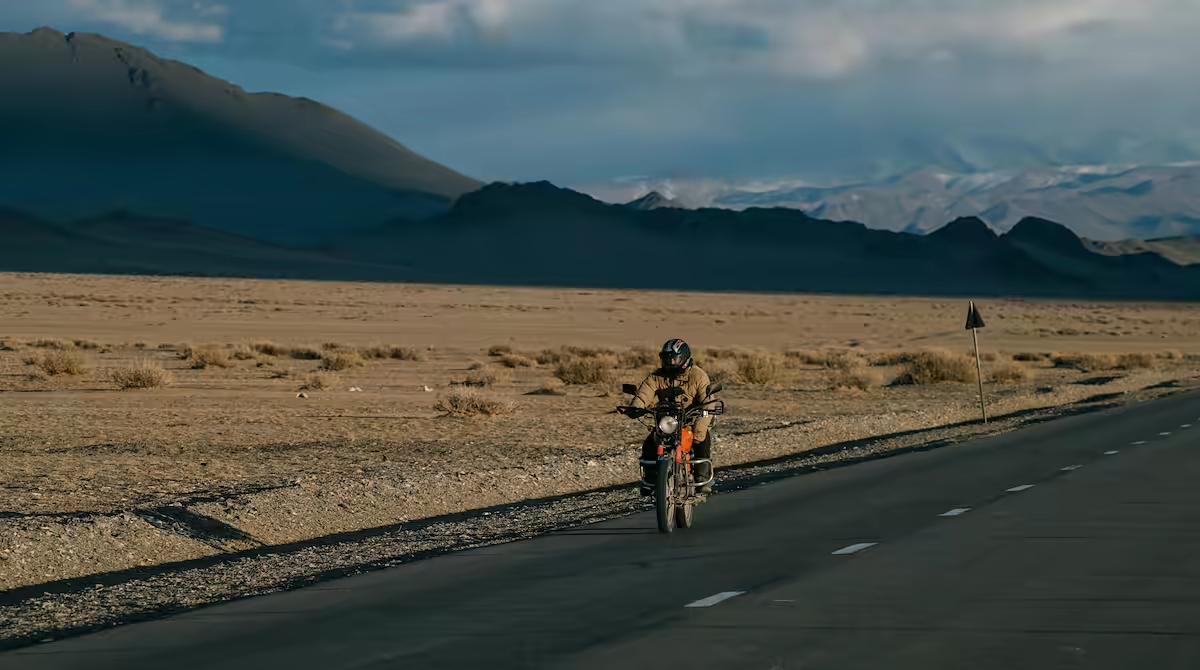
I don’t usually ride past 5 or 6 in the evening, but what if it’s 4:40 p.m., you’ve been on the bike for eight hours and the next town with a hotel, or your destination, is 90 miles (about 145 km) away? The sun is already hitting you from the side as it gets ready to set, your back and knees are complaining, and your phone shows a single bar of signal. Nobody is riding behind you to call for help if something happens. That’s the real difference between riding with company and riding alone: whatever goes right or wrong, you have to solve it yourself, and only you.
A long solo motorcycle trip isn’t a stretched-out version of your weekend ride. It’s won at the kitchen table, weeks ahead: with stages that don’t wring you out, a bike that’s been checked, luggage that’s well balanced and a plan for when things get complicated. Here I’ll try to put together a step-by-step guide, with a full section for those who cross into Mexico on U.S. plates, where most of the paperwork gets stuck. And for those of us who take long road trips.
In short: Plan short stages and leave buffer days · Service the bike and check tires and chain before you leave · Pack the weight low and centered · Carry a tire plug kit and a compressor, and share your itinerary · For Mexico: Mexican insurance is mandatory, plus a temporary import permit (if you leave the free zone) and an FMM.
Before you start: are you ready?
My personal recommendation: if you’re still learning to merge onto a highway, build up miles calmly first. There’s no rush; faraway destinations will still be there. Small adventures count too! In Getting started on a motorcycle we cover training courses, gear and basic checks; in Motorcycle confidence, the technique and drills to ride more safely; and in Your first time on the highway, what changes when the speed goes up. Don’t try out anything important on the big trip: first do a weekend ride with all your luggage on the bike.
Planning: how many miles to ride a day, and buffer days
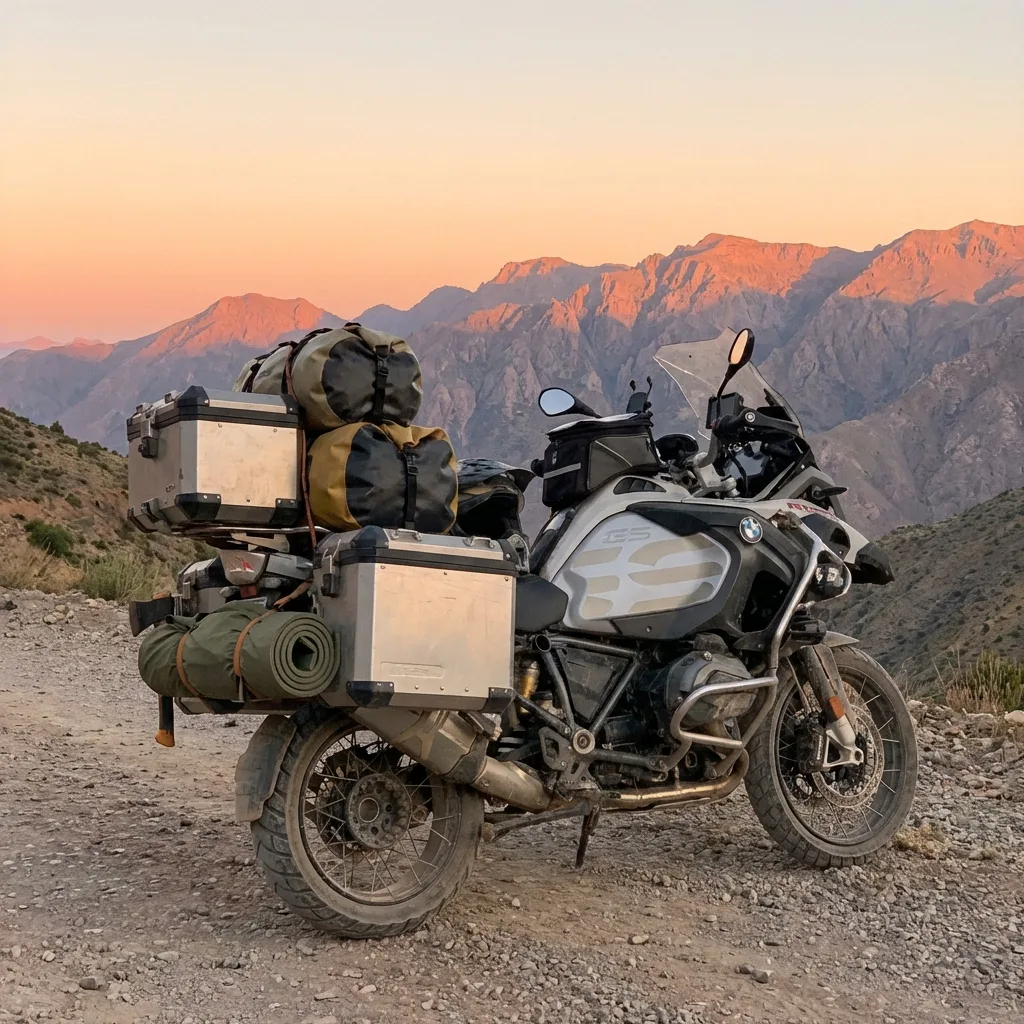
The classic mistake is planning with the distance on the map instead of the distance your body can handle. For example, you can’t always ride 500 miles (about 800 km) a day: I try to do 300 miles (about 480 km) at most, starting early, so I have some time in the day to work, prepare the next stage of the trip and rest. I’m sure that, with stops for gas, food and rest, an eight-hour day rarely gives you more than 350 to 400 miles (560 to 640 km), and that’s already demanding, in my humble opinion, but to each their own. I’m just saying that for a first solo trip, 200 to 300 miles (320 to 480 km) a day is much more enjoyable.
Here’s what works when you build the route:
- Split it into stages, not days. Each stage ends somewhere with lodging, gas and cell signal. Mark a plan B halfway.
- Build in buffer days. For every five or six days on the road, keep one empty: for the weather, a breakdown, a flat tire or simply because you’re tired. If you don’t use it, you get extra time to see something.
- Arrive in daylight. Plan to finish each stage before sunset. Riding at night on rural roads adds risk (wildlife, potholes, poor visibility) and, if you’re in beautiful Mexico, even more so.
- Check the distance between gas stations. In the desert or the mountains, your bike’s real range is what counts; figure 20% less than the manufacturer’s number.
- I usually carry an empty fuel bladder and, if a stretch of desert comes up, it’s best to carry it full as a reserve.
Get the bike ready: service, tires and chain
Do a full service with time to spare, not the day before, so you can catch anything that wasn’t done right.
- Oil and filters per your model’s manual, and check the brake fluid and coolant levels.
- Brakes: pads with enough life for the whole trip.
- Battery and lights: make sure it charges properly and every light works.
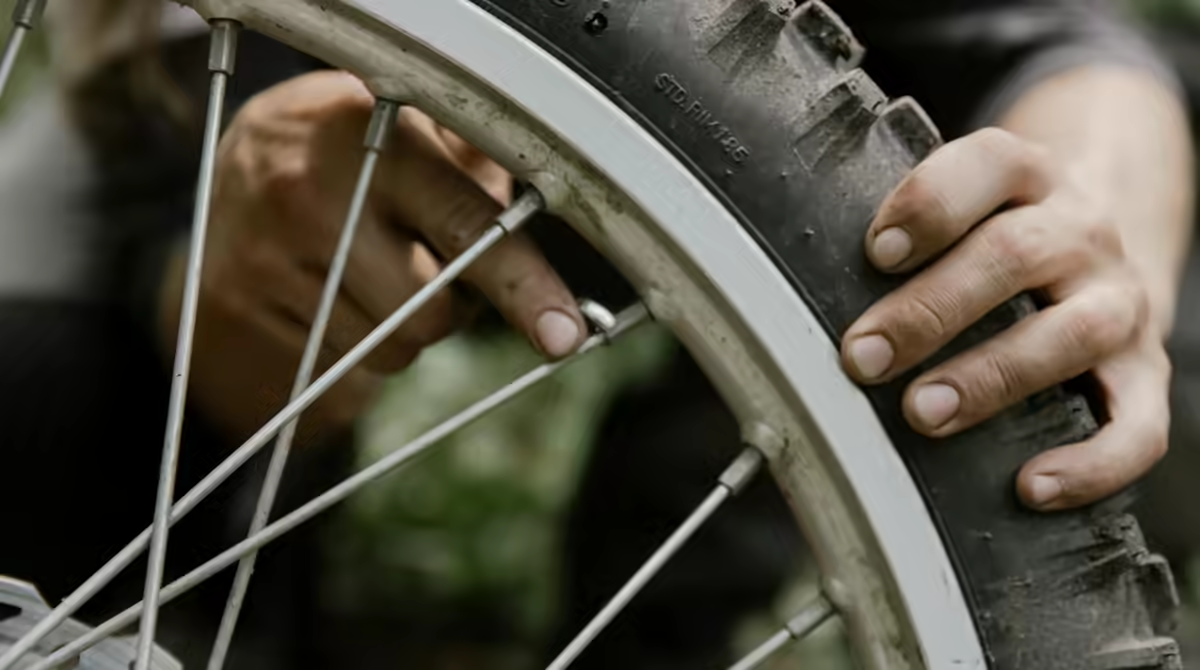
- Tires: what matters most. Check the tread, cuts and the manufacturing date (DOT code: week and year); if they’ll wear out halfway through the trip, replace them before you go. Check the cold pressure every morning.
- Chain and sprockets: clean, lube and adjust the slack per the manual; it’s the most common avoidable failure. On the road, lube it every 300 to 500 miles (500 to 800 km), more often in rain or dust. If your bike has shaft drive, like the Honda Gold Wing, there’s no chain to lube, but check the final drive oil per the manual.
- Fasteners: go over the spots that vibration loosens (luggage mounts, exhaust, mirrors) with a torque wrench.
- Don’t forget a tool kit for your model.
- Always carry a spare key for your bike and/or a security lock.
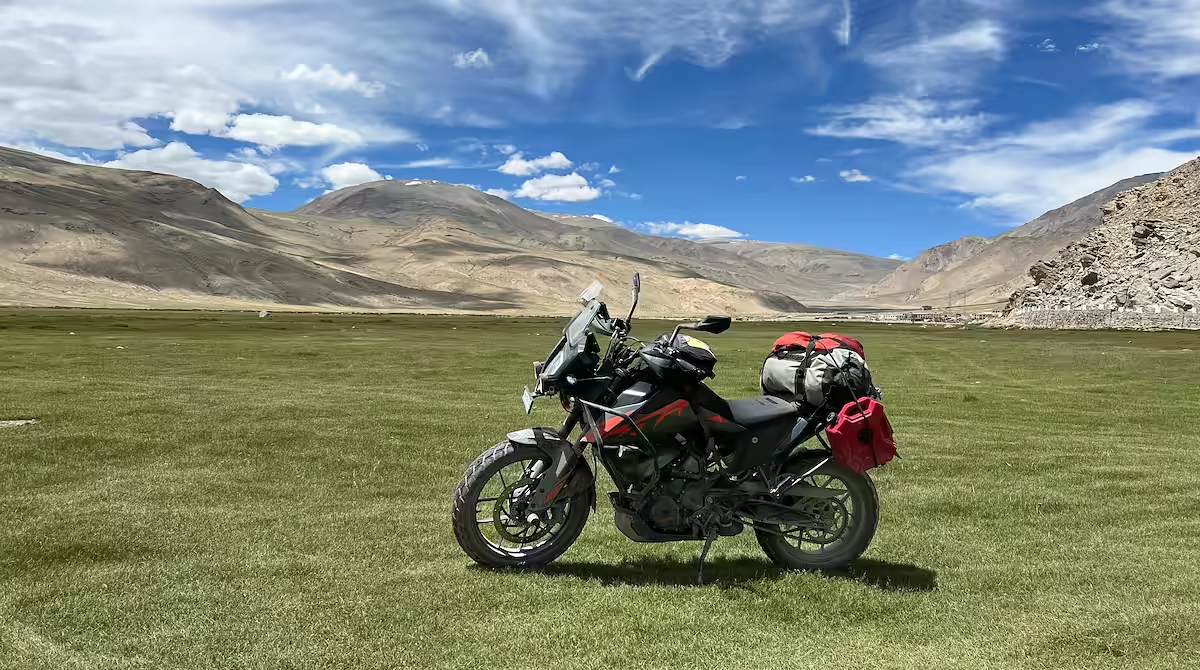
Motorcycle luggage: weight low and centered
A motorcycle handles best when the weight sits close to its center of gravity and as low as possible. Heavy items too far back or too high make the steering light and the bike unstable.
How to distribute it:
- Heaviest items low and close to the center: tools, compressor, lock and liquids, in the side cases and split evenly.
- Light, bulky items on top and toward the back: clothes, sleeping bag and tent in a roll on the rear seat.
- What you use all the time, within reach: spare gloves, water, documents and first-aid kit.
- Respect your bike’s load capacity (frame label or manual) and adjust the rear preload and tire pressure per the manual.
What to pack: a basic motorcycle packing list
- Helmet, jacket, pants and gloves with armor, boots and rain gear
- Clothes for five days and a thermal layer
- Documents in a waterproof pouch, plus digital copies
- First-aid kit with your medications, extra water and snacks
- Lock and anti-theft cable, headlamp and power bank
- If you camp: tent, sleeping bag, sleeping pad and stove
Tools and fixing a flat tire on the road
The factory tool kit is good for minor adjustments. Put together your own kit with what you know how to use: wrenches and sockets in your bike’s sizes, screwdrivers, pliers, a multitool, electrical tape, zip ties, spare fuses and chain lube.
If your tires are tubeless, add a tire plug kit and a portable 12 V compressor. A nail in the tread is the most common flat and, with the right tools and a bit of practice, you can plug it on the side of the road in twenty or thirty minutes. In broad strokes: remove the object, ream the hole, insert the plug with cement, trim the excess, inflate to the recommended pressure and check for leaks with soapy water.
Two warnings. A plug is an emergency repair: ride at a moderate speed to a shop, because many manufacturers recommend replacing a punctured tire. And it won’t work on large cuts or sidewall damage. If your bike runs tubes, you need tire levers, patches and a spare tube.
Practice in your garage before you leave: a kit you’ve never opened is just dead weight.
Communication and safety when you ride solo
- Share your itinerary with two people you trust: route, booked hotels, plate number, and your bike’s color and model. Agree on a set “I made it” time each day and what to do if you don’t check in: who they call and when.
- Satellite messenger: in areas without coverage (desert, mountains, national parks), a satellite messaging device lets you send your location and call for help. It requires a subscription and checking its coverage on your route; test it before you leave.
- Offline maps: download the full route and the surrounding areas in your navigation app.
- Emergency info: set up your phone’s medical ID (allergies, blood type, contacts) and carry a printed card inside your helmet or in your wallet. Write down your insurance and, if you’re crossing a border, your consulate.
- Full gear, always, even when it’s hot: a certified helmet (DOT, ECE or Snell), jacket, gloves and boots.
- Use an app to share your live location with family, friends and your emergency contact. Those apps are really useful!
Money and documents
Split your money: one card and some cash in your wallet, another card and backup cash hidden on the bike. Let your bank know your travel dates. Carry a valid license with a motorcycle (Class M) endorsement, the bike’s registration, proof of insurance and, if you’re crossing, your passport, with photos of everything saved offline. If your license is from another country or you’re crossing into Canada or Mexico, check which license you need on each side.
Health and fatigue
Fatigue is the silent enemy of solo travel: there’s no riding buddy to say “let’s stop.”
- Every hour and a half or two hours, get off, stretch and drink water. What feels like “I can keep going” is often fatigue in disguise.
- Wear filtered earplugs: constant noise wears you out more than you think.
- If you get sleepy, stop and rest for twenty minutes. Better to lose an hour than to risk your life.
The mental side of riding alone
Riding alone gives you freedom, but also long silences and doubts when something goes wrong. That’s normal. Set small goals (“make it to the next town”) instead of thinking about the 1,200 miles (2,000 km) still ahead, text someone every night and accept that a rest day isn’t a failure. If a place or a person doesn’t feel right, trust your gut and leave.
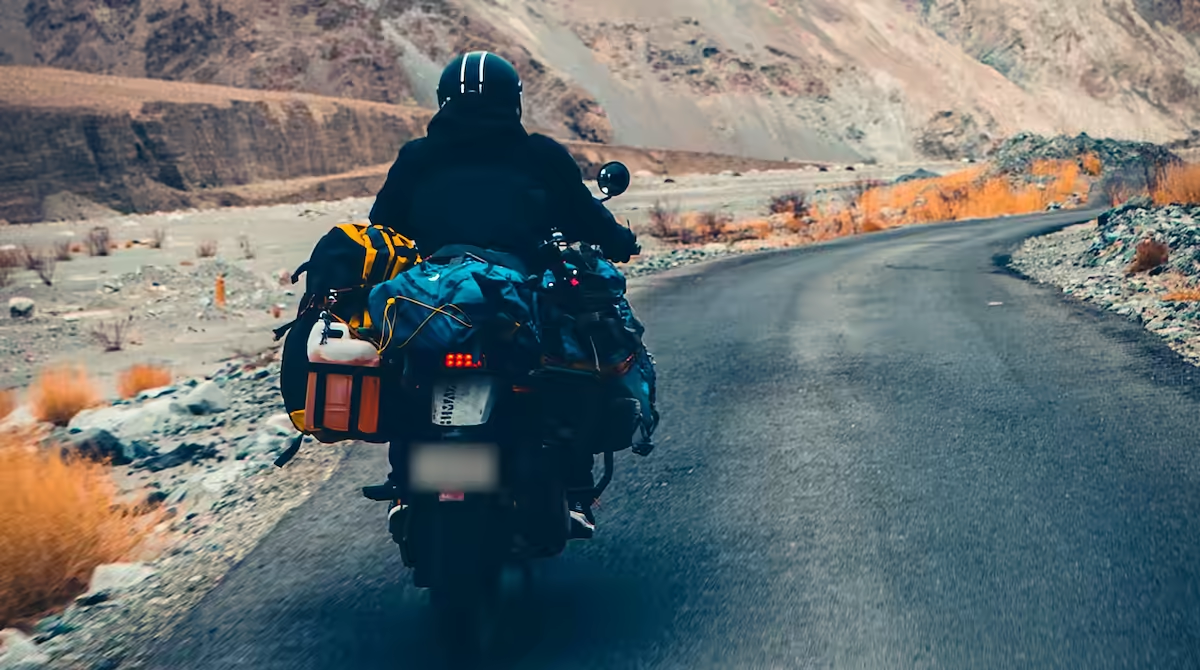
Lodging or camping
For a first solo trip, a hotel with secure parking simplifies the logistics and lets you sleep well. Camping makes the trip cheaper and takes you to unique places, but it takes preparation: official campgrounds or public land where it’s allowed, arriving in daylight and letting someone know where you’ll be. Follow Leave No Trace principles so you don’t damage the place. For more, see our off-road trail ethics guide.
In the desert, pitch your tent away from dry washes (a distant storm can cause a flash flood) and store your food so it doesn’t attract wildlife.
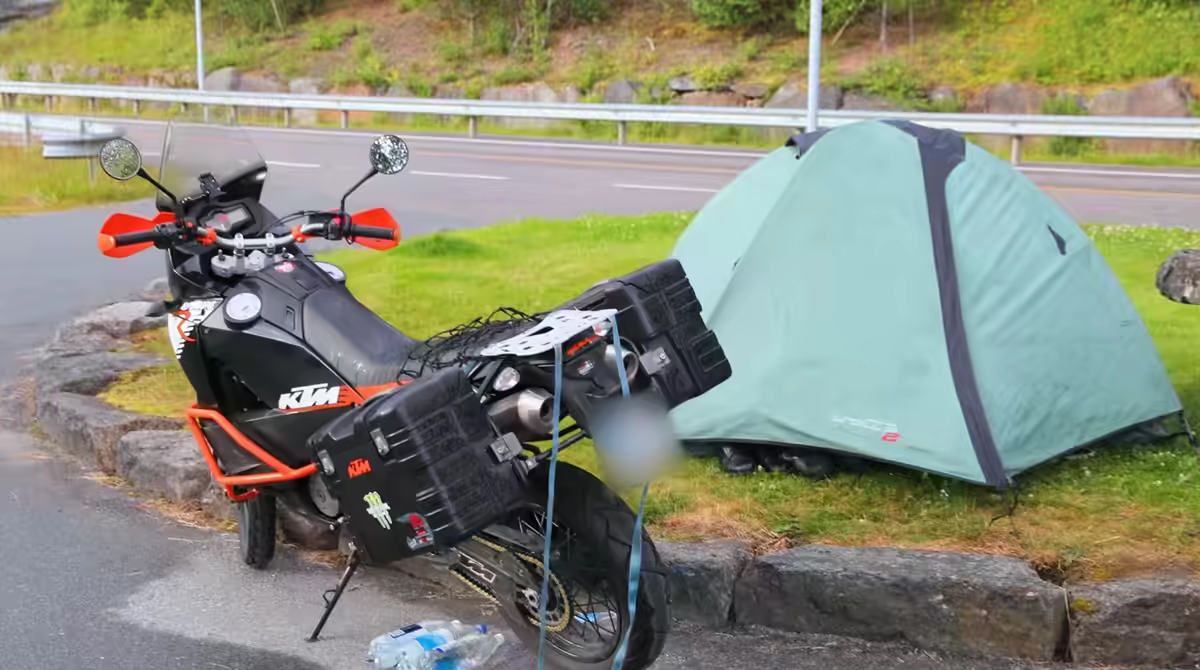
Riding into Mexico on a U.S.-plated motorcycle
For many Latinos, riding to Mexico is the dream trip. It’s very doable, but there are three pieces you can’t improvise: insurance, the vehicle permit and the immigration permit. Requirements change; confirm everything with official sources. What follows is current as of October 29, 2026.
Mexican motorcycle insurance is mandatory
Your U.S. policy generally doesn’t cover liability in Mexico. Specialized brokers such as Baja Bound agree that you need at least a liability policy from a Mexican insurer, and that it’s mandatory on federal highways. Without it, an accident becomes a huge legal and financial problem. Get a quote for a policy that covers your specific bike, print it, and check with your U.S. insurer what, if anything, it covers outside the country.
Banjercito Temporary Import Permit (TIP)
If you’ll leave the free zone (see below), your bike needs a temporary vehicle import permit. Banjercito issues it online, at customs modules on the border or at Mexican consulates in the U.S. According to Banjercito’s official page (in Spanish), updated October 27, 2026:
- Processing fee: $51 plus VAT at modules and consulates, and $45 plus VAT if you apply on the official website.
- Guarantee deposit: it depends on the model year, not the vehicle type. Banjercito doesn’t publish a separate amount for motorcycles: $200 for 2000 and older models, $300 for 2001 to 2006 and $400 for 2007 and newer. In other words, a recent bike pays $400.
- How you get it back: the deposit is refunded when you register the permanent return before the permit’s expiration date, in cash at a border module (if you paid in cash) or to the same card.
- Applying online: you apply 10 to 60 days before the trip, according to Mexico’s National Customs Agency (ANAM) (in Spanish); at a consulate, up to six months ahead.
Bring your ownership documents (title or registration in your name), ID and passport. The permit is tied to the person and the vehicle, and the bike has to leave the country with you.
The free zone and the Baja California and Sonora exceptions
Not all of Mexico requires a vehicle permit. There are zones where you can ride without one: a strip along the border, the Baja California peninsula and part of Sonora. The boundaries come with nuances, so check the current map from Banjercito or ANAM. If you take the ferry from Baja to the mainland, you’ll need the permit.
For Sonora there’s the “Sonora Only” program: a permit valid only within the state that, according to travel guides, requires no deposit but does charge the fee. ANAM lists it on its vehicle import page, but we couldn’t find its 2026 cost on an official site, so ask Banjercito before counting on it. A third-party guide describes the Sonora free zone as the area north and west of a line from Agua Prieta to Imuris and from there to Empalme along Highway 15 (it includes Puerto Peñasco, Hermosillo, Guaymas and San Carlos). Take it as a reference, not as the rule.
FMM, canceling the permit when you leave, and the Green Angels
- FMM: the Forma Migratoria Múltiple is your tourist permit to stay in the country. Mexico’s immigration institute (INM) offers an electronic FMM (in Spanish) for land entries. The rules on when it’s required and how much it costs change depending on the zone and the length of your stay, so confirm them with the INM before you cross. Keep the exit portion.
- Return the permit when you leave: on your way back, stop at the Banjercito module and cancel the permit; that’s also where your deposit is refunded. If you leave without canceling it, you risk losing the deposit.
- Green Angels (Ángeles Verdes): the roadside assistance service of Mexico’s Ministry of Tourism. You call 078 and they offer mechanical help, assistance and guidance on the highways. Save the number before you cross.
Frequently asked questions
How many miles can I ride a day on a long solo trip?
For a first trip, 200 to 300 miles (320 to 480 km) a day is a comfortable pace. With experience and good weather, some riders do 350 to 400 miles (560 to 640 km), but fatigue builds up. It’s best to plan less and keep buffer days.
What should I pack for a long motorcycle trip?
Full protective gear and rain gear, a tool kit and a flat repair kit with a compressor, a first-aid kit, documents with digital copies, a spare key for the bike, a power bank and, if you’ll cross the desert, a fuel bladder as a reserve. Pack the weight low and centered.
What do I need to fix a flat tire on the road?
With a tubeless tire: a plug kit, cement, a 12 V compressor and a pressure gauge. It’s an emergency repair: have a shop inspect the tire.
Does my U.S. insurance cover me in Mexico?
Generally not. You need a liability policy from a Mexican insurer. Confirm with your insurer and with the broker that the policy covers your motorcycle.
How much does a temporary import permit for a motorcycle cost?
Banjercito charges $51 plus VAT at modules and consulates ($45 plus VAT online) and a refundable deposit of $200, $300 or $400 depending on the model year. A 2007 or newer bike pays $400.
Do I need a vehicle permit to ride in Baja California?
The peninsula is part of the free zone, so usually not. The boundaries change, so confirm them with Banjercito, and remember that you will need it to take the ferry to the mainland.
What do I do if I lose signal and have an emergency?
That’s why a satellite messenger and a shared itinerary make sense. On Mexican highways, the Green Angels’ 078 line answers when you have signal.
Hit the road
I promise you that, in the end, a good solo trip looks a lot like a well-run trip with company: calm, preparation and the humility to change the plan. Once I had to stop my trip for a couple of days because of a flu that left me with body aches and exhaustion; the worst thing you can do is push your body and not give it the rest it needs to keep the adventure going. Many riders recommend starting with a short route, learning from it and going longer little by little. When you reach that border, with everything in order and the bike ready, all that’s left is to enjoy the ride.
Photos
Photo 1: the author’s personal archive.
Photo 2: Syed Qaarif Andrabi, via Pexels · Pexels License.
Photo 3: Pixel9inja, via Pexels · Pexels License.
Photo 4: cottonbro studio, via Pexels · Pexels License.
Photo 5: Yogendra Singh, via Pexels · Pexels License.
Photo 6: Marek Ślusarczyk (Tupungato), via Wikimedia Commons · CC BY 3.0 · cropped.
Photo 7: Julia Volk, via Pexels · Pexels License.
